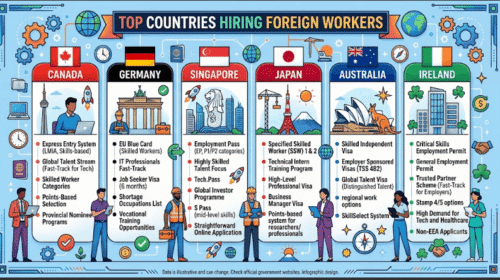










- How to Get an EU Work Permit:Working in Europe offers incredible opportunities and a higher quality of life, but navigating work permits can feel overwhelming. Fortunately, some EU nations are much more welcoming to non-EU citizens than others. This straightforward guide breaks down the top 9 easiest EU countries to secure a work permit, helping you launch your career abroad without the complicated jargon.
Understanding Eu Work Permits
A work permit is an official document that lets you legally work in a country. Every EU nation has its own system, but the goal is the same: to control who can take jobs and who can stay. In general, you need:
- A valid job offer from a company in the country.
- Proof you have the skills and qualifications for the job.
- Sometimes, a university degree or special skill in demand.
Getting a work permit does not mean you get permanent residency, but in some countries, it’s a first step toward that goal. EU work permits are different from the EU Blue Card, which is a special permit for highly skilled workers.
Many people think all EU countries are strict, but some nations have relaxed their rules to attract talent. These countries want skilled workers, entrepreneurs, or even seasonal laborers and are willing to make the process easier.
Key Factors That Make A Country “easier”
Not every country is simple for work permits. Here’s what makes a country easier:
- Fast processing times: Some countries process applications in weeks, not months.
- Lower requirements: Fewer documents, less proof, lower education levels.
- Jobs in demand: Countries with skill shortages often accept more foreign workers.
- Clear pathways: Steps are well-defined and easy to follow.
- Friendly policies: Governments encourage foreign workers.
These factors matter for anyone hoping to move and work in Europe. Now, let’s look at the countries that stand out.
1. Portugal
Portugal has become one of the most welcoming EU countries for foreign workers. The government wants to attract talent, and its immigration system is designed to be simple and transparent.
Why Portugal Is Easy
- Processing time: Applications are often processed in 2–4 months.
- Job offer: Needed, but many employers are open to foreign candidates.
- Language: Many jobs are available in English, especially in tech and tourism.
- Shortage occupations: IT, hospitality, health care, and agriculture.
Pathways To A Work Permit
Portugal offers several options:
- Standard Work Visa: With a job offer, you apply at the Portuguese consulate.
- Job Seeker Visa: Allows you to enter Portugal and search for work legally.
- Golden Visa: For investors or entrepreneurs.
Most applicants use the standard work visa. You need a signed contract, proof of qualifications, and sometimes health insurance.
Non-obvious Insight
Many people overlook the Job Seeker Visa, which lets you look for a job inside Portugal. This option is rare in other EU countries.
Example
Maria from Brazil applied for a hotel job in Lisbon. Her employer helped with paperwork. She got her visa in 12 weeks and started work soon after.
Practical Tips
- Focus on industries with staff shortages.
- Prepare all documents in advance.
- Learn basic Portuguese to boost your chances.
2. Estonia
Estonia is a small country but a leader in digital solutions. It’s famous for e-Residency and is open to international talent.
Why Estonia Is Easy
- Simple online application: Most paperwork is digital.
- Fast processing: Work permits are often ready in 30 days.
- Startup-friendly: Entrepreneurs and IT workers are highly welcome.
- No language barrier: Many companies use English.
Pathways To A Work Permit
Estonia offers:
- Short-term employment registration: For up to 12 months, fast approval.
- Long-term work visa: For jobs with a contract.
IT and startup jobs are especially easy, but other fields like engineering and logistics are also open.
Non-obvious Insight
Estonia allows remote work for startups, meaning you can join a company even if you work from outside Estonia part-time.
Example
Ahmed from Egypt got a job with a tech startup. His work permit was approved online in 3 weeks, and he moved to Tallinn.
Practical Tips
- Apply for e-Residency if you want to start a business.
- Check job boards for English-speaking positions.
- Make sure your employer registers you for short-term work.
3. Czech Republic
The Czech Republic is well-known for its stable economy and high demand for workers. Many companies actively look for foreigners.
Why Czech Republic Is Easy
- Low unemployment: Employers often can’t find local workers.
- Blue Card: For skilled professionals, fast approval.
- Seasonal jobs: Agriculture, manufacturing, and tourism offer quick permits.
- English jobs: Especially in Prague and Brno.
Pathways To A Work Permit
- Employee Card: For long-term employment.
- Blue Card: For highly skilled workers.
- Short-term work visa: For seasonal jobs.
Most applicants use the Employee Card, which requires a job offer and proof of qualifications.
Non-obvious Insight
The Blue Card process is easier in Czech Republic than in many other EU nations, especially for IT and engineering jobs.
Example
Li from China was hired by a car manufacturer. She got her Employee Card in 2 months, thanks to a shortage in her field.
Practical Tips
- Apply for jobs in sectors with labor shortages.
- Get documents translated to Czech.
- Use official government websites to check requirements.
4. Lithuania
Lithuania is a fast-growing country with open policies for foreign workers. Its work permit system is one of the most flexible in the EU.
Why Lithuania Is Easy
- Quick approval: Most permits issued in 1–2 months.
- Low requirements: No need for high education in many jobs.
- English-friendly: Especially in Vilnius and Kaunas.
- Startup visa: For entrepreneurs.
Pathways To A Work Permit
- Standard Work Permit: For most jobs.
- Highly Skilled Visa: For those with degrees.
- Startup Visa: For launching a business.
Most applicants use the standard work permit, which only needs a job offer and basic qualifications.
Non-obvious Insight
Lithuania’s Startup Visa is open to people with a business idea, not just big investors. Even small projects are welcome.
Example
Sofia from Argentina joined a logistics company in Vilnius. Her permit was approved in 5 weeks.
Practical Tips
- Target sectors with open positions.
- Make sure your employer is registered.
- Learn key phrases in Lithuanian to impress at interviews.
5. Germany
Germany is Europe’s largest economy and has clear pathways for foreign workers. Though requirements are strict, the process is very predictable and efficient.
Why Germany Is Easy
- High demand: Skilled workers needed in engineering, IT, health care.
- Blue Card: For university graduates, fast-track option.
- English jobs: Many positions in tech and research.
- Job Seeker Visa: Lets you enter and look for work.
Pathways To A Work Permit
- Blue Card: For skilled workers with a degree.
- Standard Work Visa: For other jobs with a contract.
- Job Seeker Visa: Up to 6 months to find a job.
Most people aim for the Blue Card, which offers a clear route to residency.
Non-obvious Insight
Germany’s Job Seeker Visa is underused. It allows you to look for jobs inside Germany, with no commitment until you’re hired.
Example
Ravi from India used the Job Seeker Visa, found work in Munich, and received his Blue Card within 4 months.
Practical Tips
- Check the official shortage list (“Mangelberufe”).
- Get your degree recognized.
- Prepare for strict document checks.
6. Spain
Spain is famous for its warm climate and friendly atmosphere. It also has flexible work permit options for non-EU citizens.
Why Spain Is Easy
- Multiple visa types: Work, seasonal, and entrepreneur visas.
- Language: Many positions available in English, especially in tourism.
- Shortage occupations: IT, health care, agriculture.
Pathways To A Work Permit
- Standard Work Visa: With a job offer.
- Seasonal Work Visa: For agriculture and tourism.
- Entrepreneur Visa: For business startups.
Spanish employers often help with paperwork, especially for jobs in demand.
Non-obvious Insight
The Entrepreneur Visa is open to people with innovative ideas. You don’t need a huge investment—just a solid business plan.
Example
Fatima from Morocco got a job in a hotel in Barcelona. Her permit was ready in 7 weeks, and her employer supported her application.
Practical Tips
- Apply early; Spain’s process can be slow.
- Learn basic Spanish to improve job options.
- Use official portals for application tracking.
7. Poland
Poland is one of the fastest-growing economies in Europe and offers simple work permit processes.
Why Poland Is Easy
- Fast approval: Permits often ready in 1–2 months.
- Low requirements: Many jobs need only basic qualifications.
- English jobs: Especially in Krakow, Warsaw, and IT sectors.
- Seasonal work: Agriculture and construction welcome foreign labor.
Pathways To A Work Permit
- Standard Work Permit: With a job offer.
- Temporary Work Visa: For seasonal jobs.
- Blue Card: For skilled professionals.
Most applicants use the standard work permit, which is processed quickly.
Non-obvious Insight
Poland has a simplified process for citizens from Ukraine, Belarus, and other Eastern countries, but anyone can apply.
Example
Omar from Tunisia was hired by a food processing company. His permit was ready in 6 weeks.
Practical Tips
- Focus on sectors with shortages.
- Have documents translated to Polish.
- Ask your employer to handle registration.
8. Slovakia
Slovakia is a lesser-known option but is open to foreign workers due to a shortage of local staff.
Why Slovakia Is Easy
- Quick process: Most permits ready in 4–8 weeks.
- Low requirements: Many jobs require only basic education.
- English jobs: Especially in manufacturing and IT.
- Seasonal work: Agriculture and industry welcome foreigners.
Pathways To A Work Permit
- Standard Work Permit: For most jobs.
- Temporary Work Visa: For seasonal work.
Most applicants use the standard work permit, which is straightforward.
Non-obvious Insight
Slovakia’s dual permit system allows you to work and live in the country with one document.
Example
Yuan from Vietnam was hired by a car factory. Her permit was approved in 5 weeks.
Practical Tips
- Target companies with international clients.
- Prepare documents in advance.
- Learn basic Slovak phrases.
9. Hungary
Hungary has become a popular choice for non-EU workers thanks to its flexible visa system and growing economy.
Why Hungary Is Easy
- Fast approval: Permits issued in 1–2 months.
- Simple paperwork: Fewer documents than many EU countries.
- English jobs: Especially in Budapest and tech sectors.
- Seasonal work: Agriculture, hospitality, and manufacturing.
Pathways To A Work Permit
- Standard Work Permit: With a job offer.
- Temporary Work Visa: For seasonal or short-term jobs.
- Entrepreneur Visa: For business startups.
Most people use the standard work permit, which is processed quickly.
Non-obvious Insight
Hungary’s Entrepreneur Visa is open to small businesses, not just tech startups. Even traditional services or retail shops qualify.
Example
Carlos from Mexico found work in a Budapest hotel. His permit was approved in 6 weeks.
Practical Tips
- Focus on jobs in demand.
- Ask your employer for support.
- Check government websites for updates.
Comparing The Top 9 Countries
To make your decision easier, here’s a comparison of processing times, main requirements, and English job availability:
| Country | Processing Time | Main Requirement | English Jobs |
|---|---|---|---|
| Portugal | 2–4 months | Job offer | High |
| Estonia | 1 month | Job offer | High |
| Czech Republic | 2 months | Job offer, qualifications | Medium |
| Lithuania | 1–2 months | Job offer | Medium |
| Germany | 2–3 months | Degree, job offer | High |
| Spain | 2–3 months | Job offer | Medium |
| Poland | 1–2 months | Job offer | Medium |
| Slovakia | 1–2 months | Job offer | Low |
| Hungary | 1–2 months | Job offer | Medium |
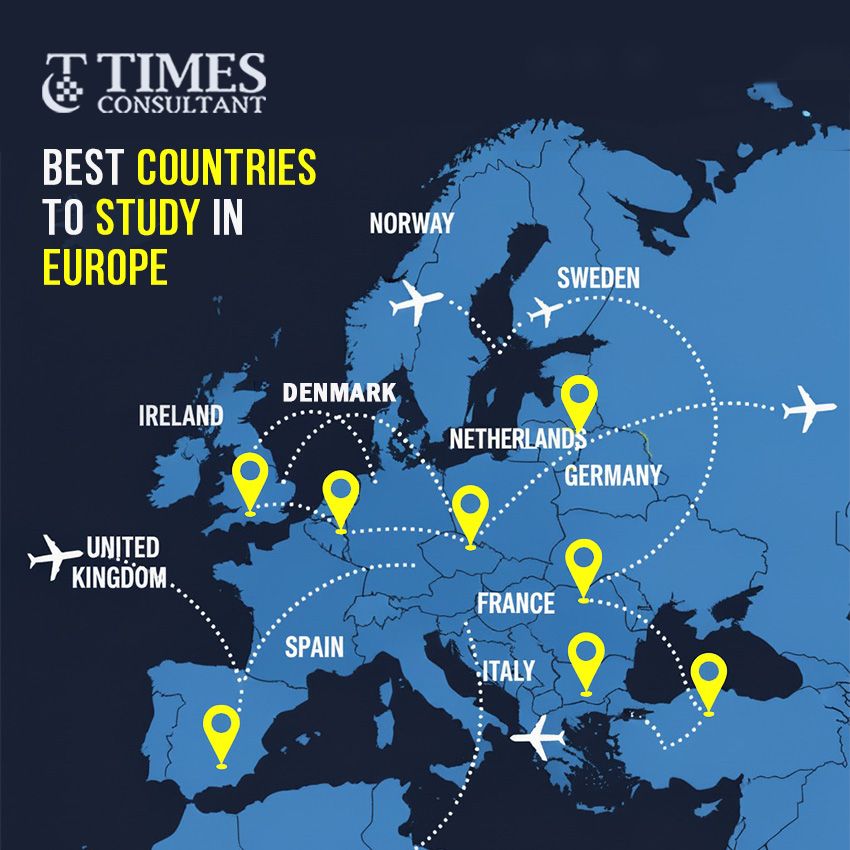
Credit: timesconsultant.com
Which Country Is Best For You?
Everyone’s situation is different. Here are some points to consider:
- If you have a tech background, Estonia or Germany are great choices.
- For hospitality or agriculture, Portugal, Spain, Poland, and Hungary are strong options.
- If you want to start a business, Lithuania, Estonia, Spain, and Hungary offer flexible visas.
- People with lower qualifications will find Poland, Slovakia, and Lithuania easier.
Don’t just pick the country with the shortest processing time. Look at language, job market, and your own skills.
The Application Process: Step By Step
While each country has its own rules, most follow a similar process. Here’s a basic guide:
- Find a job offer: Search online or use local recruiters.
- Gather documents: Passport, job contract, proof of qualifications, health insurance.
- Apply for the permit: Submit your application online or at a consulate.
- Wait for approval: Track your application status.
- Travel and start work: Once approved, move and begin your job.
Some countries allow you to apply for jobs from inside the country (Job Seeker Visa). Others require you to apply from your home country.
Common Mistakes
- Not checking if your qualifications are recognized.
- Missing documents or incomplete forms.
- Not preparing translations (many countries need documents in their language).
- Ignoring deadlines or renewal dates.
Data Table: Typical Requirements
Here’s a look at the most common requirements:
| Requirement | Countries Needing It | Notes |
|---|---|---|
| Job Offer | All 9 | Essential for permit |
| University Degree | Germany, Czech Republic (Blue Card) | Helps for skilled jobs |
| Health Insurance | Portugal, Germany, Spain | Required for visa |
| Language Proof | Some (rarely mandatory) | Helpful but not essential |
| Business Plan | Estonia, Lithuania, Hungary, Spain | For entrepreneur visas |
Latest Updates And Trends (2026)
Several EU countries are updating their rules to attract workers:
- Portugal recently expanded its Job Seeker Visa.
- Germany is making the Job Seeker Visa more flexible.
- Poland is increasing quotas for seasonal workers.
- Estonia has new incentives for digital nomads.
- Lithuania is promoting startup visas for young entrepreneurs.
Always check the official government sites for the latest news. The EU is facing labor shortages, especially in health care, tech, and agriculture. Many countries now give priority to these sectors.
Realistic Expectations
Getting a work permit is not guaranteed. You need to:
- Have a solid job offer.
- Prepare documents carefully.
- Follow each country’s rules.
But if you choose one of the easier countries, your chances are much better. Many people succeed every year—even without perfect qualifications.
Credit: immigrantinvest.com
Practical Tips For Success
- Network online: Use LinkedIn and local job portals.
- Prepare for interviews: Practice English or the local language.
- Stay organized: Keep all documents in a folder.
- Ask employers for help: Many companies support foreign hires.
- Plan for arrival: Arrange housing and insurance before you move.
Data Table: Cost Of Living
Knowing the cost of living helps you plan. Here’s a comparison:
| Country | Average Monthly Rent (1BR) | Average Salary (USD) | Notes |
|---|---|---|---|
| Portugal | $700 | $1,700 | Lisbon higher |
| Estonia | $600 | $2,000 | Tallinn higher |
| Czech Republic | $650 | $1,900 | Prague higher |
| Lithuania | $500 | $1,500 | Vilnius higher |
| Germany | $1,000 | $3,000 | Major cities higher |
| Spain | $850 | $2,000 | Madrid/Barcelona higher |
| Poland | $550 | $1,600 | Warsaw higher |
| Slovakia | $500 | $1,400 | Bratislava higher |
| Hungary | $600 | $1,700 | Budapest higher |
Where To Find Official Information
Always use official sources. For example, the European Union Immigration Portal gives details for every country’s process. You can also check local embassy websites and job boards. For updated and reliable information on EU work permits, visit the European Commission Immigration Portal.
Frequently Asked Questions
What Is The Easiest Eu Country To Get A Work Permit?
Portugal and Estonia are often seen as the easiest, thanks to fast processing, low requirements, and many English-speaking jobs.
Do I Need A University Degree For An Eu Work Permit?
Not always. Only some countries (like Germany or Czech Republic’s Blue Card) require a degree. Most jobs need only basic qualifications.
Can I Apply For A Work Permit Without A Job Offer?
In most cases, you need a job offer. Exceptions include the Job Seeker Visa in Portugal and Germany, which let you search for work after arriving.
How Long Does It Take To Get A Work Permit In The Eu?
It depends on the country. Fast countries like Estonia, Lithuania, Poland, Hungary, and Slovakia issue permits in 1–2 months. Others, like Portugal and Spain, can take up to 4 months.
Can I Bring My Family With Me?
Yes, many countries allow family reunification. You can apply for your spouse and children, but requirements vary by country.
Moving to Europe for work is a big step, but choosing the right country makes all the difference. With the information in this guide, you’re ready to find the easiest country for your journey and start planning your future in the EU.

Credit: www.atlys.com
Tragedy at Sea: 15 Perish, Including Indian Tourists, as Speedboat Capsizes in Vietnam