









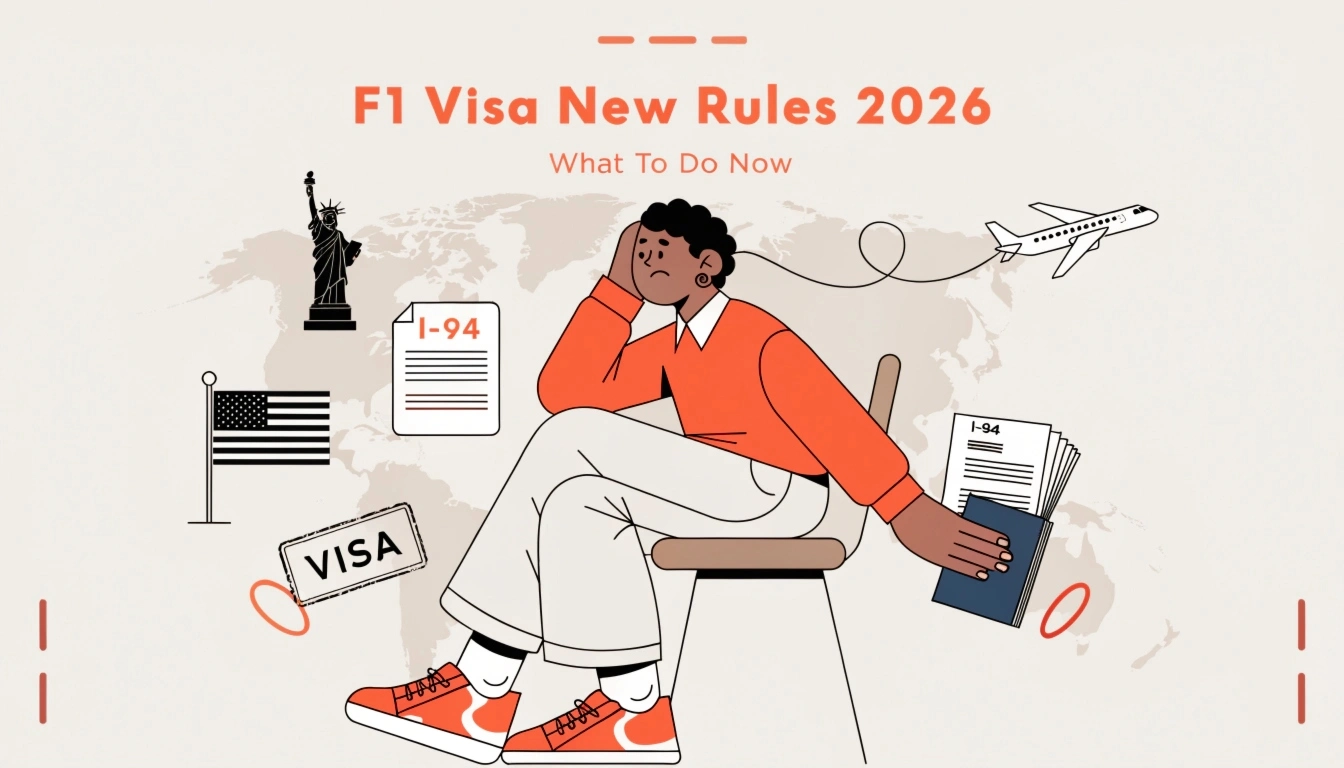
Us Student Visa (F1) New Rules 2026: Strict Changes for International Students
Every year, thousands of students from around the world dream of studying in the United States. The F1 student visa is the key that unlocks this opportunity. But in 2026, new rules are coming that will change how international students apply, study, and live in the US. These changes are stricter than before, making the process more difficult and competitive. If you are planning to study in America, you must understand these updates to avoid mistakes and prepare for success.
In this article, you will learn what the 2026 F1 visa rule changes are, how they affect students, and what you should do to prepare. You will see clear examples, practical advice, and data that show why these changes matter.
Whether you are a parent, student, or education consultant, this guide will help you make smart decisions and avoid common problems.
What Is The F1 Visa?
The F1 visa is a non-immigrant visa for international students who want to study full-time at accredited universities, colleges, high schools, or language schools in the US. It is the most popular student visa for academic programs. To get an F1 visa, you must be accepted by a SEVP-approved school, prove you can pay for your education and living costs, and show you plan to return home after finishing your studies.
F1 visa holders can:
- Study full-time in the US
- Work on campus for up to 20 hours per week
- Apply for Optional Practical Training (OPT) after graduation
- Travel in and out of the US during their program
But the rules and requirements for F1 visa applicants are changing in 2026. If you want to study in America, you must know about these strict new rules.
Why Are F1 Visa Rules Changing In 2026?
The US government updates visa rules to protect national security, manage immigration, and support its education system. In recent years, concerns about visa fraud, illegal work, and overstaying have increased. The Department of Homeland Security (DHS) and the US State Department have announced tougher rules for 2026 to:
- Reduce visa abuse and fraud
- Increase oversight of international students
- Make sure students return home after graduating
- Improve tracking and reporting by schools
These new rules are designed to make the F1 visa system safer and more efficient. But they also make it harder for students to qualify and stay in the US.
Credit: peterchu.com
Main Changes To F1 Visa Rules In 2026
Several important changes are coming in 2026. If you are planning to apply for an F1 visa, you must pay attention to these updates:
1. Stricter Financial Proof Requirements
You must show strong financial proof to get an F1 visa. In 2026, the requirements are stricter:
- Minimum funds must cover tuition, fees, and living expenses for at least one academic year.
- Only official bank statements, government scholarships, or certified sponsor letters are accepted.
- Fake or unclear documents will lead to immediate rejection.
Example: In 2026, the average required funds for one year at a US university is $45,000. If your bank statement shows less, your visa may be denied.
2. Tighter Interview Screening
Visa interviews at US embassies will be more detailed. Officers will ask deeper questions about your study plans, finances, and reasons for choosing the US. Common questions include:
- Why did you choose this school and program?
- Who is paying for your education?
- What are your plans after graduation?
If your answers are unclear or inconsistent, you may be rejected.
3. Higher English Language Standards
To ensure students can succeed, new rules require higher English proficiency scores. Most universities now require:
- TOEFL iBT: Minimum 90
- IELTS Academic: Minimum 7.0
Some schools may accept lower scores, but visa officers can deny applicants who do not show strong English skills.
4. More Detailed School Reporting
Schools must report student attendance, academic progress, and changes in status more often. The SEVIS system (Student and Exchange Visitor Information System) is updated to track every student closely.
If you miss classes, fail courses, or change majors without approval, your visa may be revoked.
5. Limited Work Opportunities
In 2026, F1 students can only work on campus for up to 10 hours per week (previously 20 hours). Off-campus work is not allowed except for OPT or Curricular Practical Training (CPT), and only with strict permission.
6. Shorter Grace Periods
After finishing your studies, you have less time to stay in the US. The grace period is reduced from 60 days to 30 days. You must leave the country quickly or apply for another visa.
7. Mandatory Exit Tracking
The US will use new systems to track when students leave the country. Schools must report when a student finishes their program or drops out. If you overstay, you risk being banned from future visas.
8. Higher Tuition Deposit Requirements
Many universities now ask for a larger tuition deposit before issuing the I-20 form. This deposit proves you are serious and helps prevent fraud.
Average deposit in 2026: $5,000–$10,000 (non-refundable if visa is denied).
9. Stricter Rules For Dependents
F1 visa holders can bring dependents (spouse and children) with an F2 visa. In 2026, new rules limit dependents’ rights:
- F2 dependents cannot work or study full-time
- Dependents must show strong financial proof
10. More Background Checks
All applicants face deeper background checks, including social media history, travel records, and family details. Any criminal record or suspicious activity can lead to denial.
Comparison Of Key F1 Visa Changes: 2026 Vs 2026
Here is a clear comparison of the main rule changes between the current system and 2026:
| Rule | 2026 | 2026 |
|---|---|---|
| Financial Proof | $35,000 minimum, flexible sources | $45,000 minimum, strict sources |
| Interview Screening | Standard questions | Deeper questions, more scrutiny |
| English Score | TOEFL 80, IELTS 6.5 | TOEFL 90, IELTS 7.0 |
| Work Hours | Up to 20/week | Up to 10/week |
| Grace Period | 60 days | 30 days |
| Tuition Deposit | $2,000–$5,000 | $5,000–$10,000 |
| Dependent Rights | Can study part-time | No study, no work |
| Exit Tracking | Manual reporting | Automatic tracking, strict reporting |
Impact Of New F1 Visa Rules On International Students
These stricter rules affect students in many ways. Understanding the impact will help you prepare better and avoid mistakes.
Financial Burden
The increase in required funds and tuition deposits means students from lower-income families may find it harder to qualify. You must plan your finances carefully and show clear proof.
Competitive Admissions
With stricter English standards and deeper interviews, only the best-prepared students will succeed. Schools and embassies will reject more applicants who do not meet the new standards.
Work And Living Challenges
Reduced work hours and stricter tracking make life harder for students who rely on jobs to pay for expenses. You must find other ways to support yourself.
Faster Departure
Shorter grace periods mean you must leave the US quickly after graduation. You cannot stay longer to find work or explore options.
Risks For Overstaying
With automatic exit tracking, overstaying even a few days can lead to serious consequences. You must follow the rules closely.
Practical Steps To Prepare For The F1 Visa In 2026
If you want to apply for an F1 visa under the new rules, follow these steps to improve your chances:
- Choose a SEVP-approved school: Make sure your school is recognized by the US government.
- Prepare strong financial documents: Gather bank statements, sponsor letters, and scholarship proof. Make sure all documents are official and clear.
- Improve your English: Take TOEFL or IELTS and aim for scores above the minimum.
- Practice interview answers: Be clear about your study plans, finances, and reasons for choosing the US.
- Pay tuition deposit early: Secure your spot and show commitment.
- Follow school reporting rules: Attend classes, maintain good grades, and report any changes.
- Avoid work violations: Do not work more than allowed or off-campus without permission.
- Monitor your visa status: Track your grace period and departure dates.
- Check your background: Make sure you have no criminal record or suspicious activity.
- Prepare for dependents: If bringing family, collect strong financial proof and understand their limited rights.
Common Mistakes That Lead To F1 Visa Rejection
Many students make simple mistakes that cause their visa applications to fail. Here are the most common errors:
- Incomplete financial documents: Missing or unclear bank statements.
- Low English scores: Not meeting minimum requirements.
- Poor interview answers: Not explaining plans or finances clearly.
- Fake documents: Using false statements or sponsor letters.
- Overstaying in the US: Not leaving during the grace period.
- Violating work rules: Working more than allowed or off-campus.
- Missing school reporting: Not attending classes or failing to report changes.
Avoid these mistakes by preparing carefully and following all rules.
Data: F1 Visa Approval And Rejection Rates
In recent years, F1 visa rejection rates have increased due to stricter rules. Here are the latest statistics:
| Year | Applications | Approvals | Rejections | Approval Rate |
|---|---|---|---|---|
| 2026 | 660,000 | 495,000 | 165,000 | 75% |
| 2026 | 700,000 | 525,000 | 175,000 | 75% |
| 2026 | 725,000 | 522,000 | 203,000 | 72% |
| 2026 (projected) | 740,000 | 518,000 | 222,000 | 70% |
The approval rate is dropping, and more applicants are being rejected. You must prepare carefully to improve your chances.
Credit: ariasvilla.com
Example: Applying For An F1 Visa In 2026
Let’s walk through a real example:
Maria, a student from Brazil, wants to study engineering at a US university in 2026.
- She selects a SEVP-approved school.
- She collects official bank statements showing $50,000 in funds.
- She earns a TOEFL score of 95.
- She pays a $7,000 tuition deposit.
- She practices clear answers for her visa interview.
- She keeps strong academic records and attends all classes.
- She checks her visa status and plans to leave within 30 days after graduation.
By following all the new rules, Maria improves her chances of getting approved. If she had missing financial proof or low English scores, she might be rejected.
Insider Tips For Success Under New Rules
Here are two non-obvious tips that most beginners miss:
- Prepare for social media screening: Visa officers may check your online profiles. Keep your social accounts clean and professional.
- Understand your school’s reporting system: Each school uses SEVIS differently. Contact your school’s international office for clear instructions.
Also, consider joining student forums or groups for advice from current F1 visa holders. Their experience can help you avoid mistakes.
Credit: vidhyantar.com
How Schools Are Responding To 2026 F1 Visa Changes
Universities and colleges are making changes to support international students:
- Offering more English language courses and tutoring
- Providing clearer financial guidance and document checklists
- Upgrading their reporting systems to comply with SEVIS updates
- Hosting webinars and workshops on visa rules
If you are applying, ask your school for support and resources.
Alternatives To The F1 Visa
If you cannot meet the new F1 visa requirements, consider other options:
- J1 Exchange Visitor Visa: For research, exchange, or training programs.
- M1 Vocational Visa: For technical and vocational studies.
- Scholarship programs: Some scholarships offer special visa support.
Each option has different rules. Compare them carefully before deciding.
Comparison: F1 Visa Vs J1 Visa (2026)
Here is a side-by-side comparison of F1 and J1 visas in 2026:
| Feature | F1 Visa | J1 Visa |
|---|---|---|
| Purpose | Academic study | Exchange, research, training |
| Financial Proof | High, strict | Medium, flexible |
| Work Rights | On-campus, OPT, CPT (strict limits) | Internships, training (with permission) |
| Grace Period | 30 days | 30 days |
| Dependent Rights | Limited | Limited |
| Background Checks | Strict | Strict |
| School Reporting | SEVIS | SEVIS |
How To Stay Compliant As An F1 Student
To avoid problems and keep your visa status safe, follow these tips:
- Attend classes and maintain good grades
- Report any changes (address, major, program) to your school
- Do not work more than allowed
- Keep your documents updated
- Monitor your visa expiration and grace period
- Leave the US on time or apply for another visa
2026 Update: Key Facts And Data
- Average tuition for international students in 2026: $35,000–$55,000 per year
- Minimum required funds: $45,000 for one year (varies by school)
- US will use biometric exit tracking for all F1 students
- More than 1,200 SEVP-approved schools in America
- 70% visa approval rate projected for 2026
For more official information, visit the US Department of State.
Frequently Asked Questions
What Is The Minimum Required Bank Balance For An F1 Visa In 2026?
You need to show at least $45,000 in your bank account to cover tuition, fees, and living expenses for one year. Some schools require more, depending on their location and program costs.
Can F1 Students Work Off-campus In 2026?
No, F1 students cannot work off-campus unless they have special permission for OPT or CPT. On-campus work is limited to 10 hours per week.
What Happens If I Overstay My F1 Visa In 2026?
Overstaying your visa can lead to a ban from future US visas and possible deportation. The US uses automatic exit tracking, so you must leave before your grace period ends.
Are Toefl And Ielts Scores Required For All F1 Applicants?
Yes, most schools and embassies require TOEFL or IELTS scores. The new minimum in 2026 is TOEFL 90 or IELTS 7.0. Some programs may accept other tests, but strong English is necessary.
Can I Bring My Spouse Or Children With An F1 Visa?
Yes, you can bring dependents with an F2 visa. They cannot work or study full-time and must show strong financial proof.
The strict new F1 visa rules in 2026 mean that international students must prepare carefully, follow all requirements, and stay informed. With the right steps, you can improve your chances and achieve your dream of studying in America. Always check for the latest updates and ask your school or embassy for help.
The future of international study in the US is changing—make sure you are ready.
US Work Visa Updates 2026: Key Changes in Immigration Rules