L If you’re searching for career growth in a new country, waiting months for a work visa can be a major roadblock. In 2026, more countries are competing to attract skilled talent, and that means fast work visas are now a global trend. For professionals, freelancers, and even recent graduates, a quick visa process means less stress and faster access to new opportunities. But not every country is equal when it comes to speed, requirements, and job market potential.
In this article, you’ll discover the top countries offering the fastest work visas in 2026. We’ll look at average processing times, who can apply, costs, and what makes each country’s system unique. You’ll also find comparison tables, real-world examples, and tips to avoid common mistakes. Whether you’re a tech worker, engineer, health professional, or just want a new adventure, this guide will help you choose your next destination wisely.
Why Fast Work Visas Matter In 2026
The global job market is more mobile than ever. Companies need talent quickly, and workers want to move without waiting for months. Fast work visas help countries fill skill gaps, boost innovation, and support economic growth. For applicants, speed means less uncertainty. You can plan your move, find housing, and start work sooner. Many countries now use digital applications, simplified forms, and “express” processing to attract top talent.
But speed is not everything. A fast visa process must also be reliable and fair. Some fast-track programs have strict rules or higher fees. Others focus on specific professions or skill levels. Understanding these differences will help you avoid surprises and wasted time.
How We Ranked The Top Countries
To create this list, we looked at:
Average processing time (from application to decision)
Eligibility (who can apply and how easy it is)
Job market demand (is it easy to get hired?)
Cost and paperwork
Recent reforms and updates for 2026
Digitalization and ease of application
We also considered feedback from recent applicants and official government data.
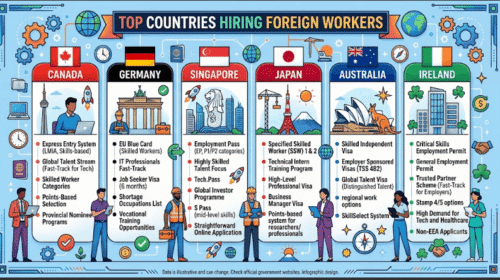
Top Countries Offering Fast Work Visas in 2026 15
Credit: www.visasupdate.com
Top 10 Countries Offering Fast Work Visas In 2026
1. Canada
Canada remains a leader in fast-track work visas. The Express Entry system allows skilled workers to get a decision in as little as 2-4 weeks for certain categories. In 2026, Canada’s Global Talent Stream (GTS) is even faster—sometimes under 10 business days for tech jobs.
Who can apply: Professionals with a job offer in IT, engineering, science, or similar fields. GTS also favors companies with a record of innovation.
Unique features: Digital application, clear checklist, no unnecessary interviews for most. Spouses and children can get open work and study permits.
Typical cost: $155 (permit fee) + biometrics; employer pays for GTS.
Recent updates: More professions added to fast track. French-speaking applicants get extra points.
Pro tip: Canada values clear, complete paperwork. Missing documents cause delays.
2. United Arab Emirates (uae)
The UAE’s Green Visa and new “Job Seeker Visa” offer fast entry and flexibility. Processing is often 1-2 weeks for qualified professionals. The Green Visa is not tied to a single employer, so you can switch jobs without reapplying.
Who can apply: Skilled workers, freelancers, and even recent graduates in key fields.
Unique features: No employer sponsorship needed. Family members can be sponsored easily.
Typical cost: Around $300–$400, plus medical test.
Recent updates: Digital portal for all applications, more professions eligible.
Pro tip: Have your degree and experience certificates attested before applying.
3. Australia
Australia’s Temporary Skill Shortage (TSS) Visa and Global Talent Visa offer processing in 1–3 weeks for priority sectors, especially tech and health.
Who can apply: Professionals with a job offer, or top talent in innovation, science, or engineering.
Unique features: Pathway to permanent residency, high salaries.
Typical cost: AUD $1,330–$2,770; employer may cover part.
Recent updates: 2026 sees more occupations on the fast-track list, simpler digital application.
Pro tip: Use an Australian government-registered migration agent for complex cases.
4. Singapore
Singapore’s Employment Pass is famous for its speed. Well-prepared applications are often approved in 3–7 days. The new ONE Pass allows top talent to live and work freely for up to 5 years.
Who can apply: Professionals with a university degree and a job offer paying at least SGD $5,000/month. ONE Pass targets leaders and experts.
Unique features: Fast digital system, few documents, no quota for main pass.
Typical cost: SGD $105 for Employment Pass, higher for ONE Pass.
Recent updates: ONE Pass now open to more sectors, including tech and finance.
Pro tip: Make sure your employer is registered with Singapore MOM (Ministry of Manpower).
5. Germany
Germany’s Blue Card and new “Opportunity Card” (Chancenkarte) let skilled workers enter and search for jobs quickly. The Blue Card often takes 2–4 weeks, while the Opportunity Card is around 2 weeks.
Who can apply: University graduates, STEM professionals, and IT experts.
Unique features: High job market demand, path to permanent residency, family reunification.
Typical cost: €100–€140.
Recent updates: More jobs open to non-EU talent, simplified English-language applications.
Pro tip: Learn some basic German; it speeds up hiring, even in English-speaking companies.
6. Portugal
Portugal’s Tech Visa and new “Job Seeker Visa” offer decisions in 2–3 weeks for most skilled professionals. Portugal is also attractive for remote workers and digital nomads.
Who can apply: Tech workers, engineers, digital professionals, and remote workers.
Unique features: Friendly immigration office, affordable fees, high quality of life.
Typical cost: €90–€120.
Recent updates: Digital application system, more eligible professions.
Pro tip: Apply early in the year; quotas can fill up fast.
7. New Zealand
New Zealand’s Accredited Employer Work Visa is processed in about 2–4 weeks for most applicants. The country is looking for health professionals, engineers, and IT talent.
Who can apply: Skilled workers with a job offer from an accredited employer.
Unique features: Clear job lists, digital applications, pathway to residency.
Typical cost: NZD $700–$750.
Recent updates: More employers now accredited, easier online application.
Pro tip: Attach all supporting documents at the start—missing files slow your case.
8. United Kingdom
The UK’s Skilled Worker Visa and “Global Talent Visa” now feature processing as fast as 1–3 weeks for priority applicants (especially STEM and health). The new “Scale-up Visa” is even faster for high-growth companies.
Who can apply: Professionals with a job offer or proof of top talent (research, tech, arts).
Unique features: No labor market test for some visas, family can join easily.
Typical cost: £610–£1,408; extra for health surcharge.
Recent updates: More digitalization, expanded list of eligible jobs.
Pro tip: Prepare for strict English language requirements.
9. Estonia
Estonia’s Startup Visa and Short-Term Work Visa are among the fastest in Europe—5–15 working days in many cases. Estonia is known for its digital-first government and easy online process.
Who can apply: Startup founders, IT professionals, and freelancers.
Unique features: No physical paperwork, startup support, access to EU market.
Typical cost: €100–€180.
Recent updates: More English-language support, easier for remote workers.
Pro tip: Use Estonia’s official digital ID system for faster updates.
10. South Korea
South Korea’s “E-7” and “D-8” work visas for professionals and investors offer processing in 7–14 days for many fields, especially tech and research.
Who can apply: Skilled professionals, engineers, researchers, and startup founders.
Unique features: High-tech job market, English-speaking support, family can join.
Typical cost: KRW 80,000–100,000 (about $60–$75).
Recent updates: Expanded list of eligible jobs, more digital applications.
Pro tip: Double-check degree authentication—Korea is strict about paperwork.
—
Below is a direct comparison of the key processing times for these top countries:
Country
Main Fast Visa Type
Average Processing Time
Canada
Global Talent Stream
10 days
UAE
Green Visa
1–2 weeks
Australia
Global Talent/TSS
1–3 weeks
Singapore
Employment Pass
3–7 days
Germany
Blue Card
2–4 weeks
Portugal
Tech Visa
2–3 weeks
New Zealand
Accredited Employer Visa
2–4 weeks
UK
Skilled Worker Visa
1–3 weeks
Estonia
Startup/Short-Term Visa
5–15 days
South Korea
E-7/D-8 Visa
7–14 days
What Makes A Work Visa “fast” In 2026?
Not all fast visas are the same. Here are the main factors that set them apart:
Digital application: Countries with online systems move faster.
Clear job lists: If your occupation is in demand, approval is quicker.
No labor market test: Some countries skip this step for top talent.
Employer accreditation: If your employer is pre-approved, you save time.
Pre-approved skills: Certain degrees or experience get instant priority.
A visa that takes 2 weeks with simple paperwork is better than one that promises “express” but asks for endless documents.
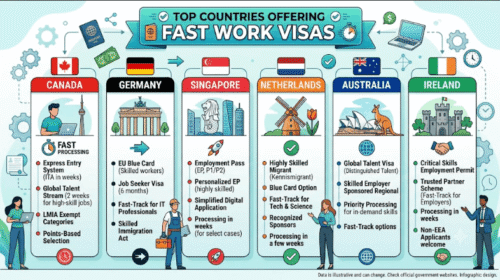
Top Countries Offering Fast Work Visas in 2026 16
Credit: www.leavingnigeria.com
Common Mistakes And How To Avoid Delays
Even in countries with fast systems, mistakes can slow your visa or lead to rejection. Here’s what to watch for:
Incomplete documents: Always check the official checklist. Missing a diploma or contract can delay you by weeks.
Wrong visa type: Some apply for tourist or student visas, then try to switch. This usually takes longer than direct work visa applications.
Poor translations: If your documents aren’t in the local language or English, use a certified translator.
Ignoring deadlines: Some offers or invitations expire quickly. Set reminders.
Unclear proof of funds: Countries want to see clear bank statements or salary letters.
Not checking employer status: Make sure your job offer comes from a company allowed to sponsor visas.
Non-obvious insight: In many countries, providing extra documents “just in case” can actually slow down your application. Only include what is required.
Fast-track Work Visas: Costs And Value
A fast visa often comes with higher fees, but the benefits usually outweigh the cost. Here’s a comparison of average costs for main fast-track visas:
Country
Typical Application Fee (USD)
Is Employer Sponsorship Needed?
Canada
$115–$155
Yes (GTS), No (Self-Employed)
UAE
$300–$400
No (Green Visa)
Australia
$900–$1,800
Yes (TSS), No (Global Talent)
Singapore
$75–$200
Yes
Germany
$110–$155
No (Blue Card, Opportunity Card)
Portugal
$100–$130
No
New Zealand
$430–$480
Yes
UK
$800–$1,700
Yes
Estonia
$110–$200
No
South Korea
$60–$75
Yes (for most)
Non-obvious insight: In some countries, employers will cover all or part of the visa fee for top talent. Always ask your HR department.
Work Visa Trends And New Programs In 2026
Global competition for skilled workers is intense in 2026. Countries are trying to be more attractive by making their work visas both faster and easier. Here are some important trends:
Remote work visas: Portugal and Estonia, for example, now have special programs for remote workers and digital nomads. These visas are fast and do not require a traditional job offer.
Points-based systems: Germany’s “Opportunity Card” and Canada’s Express Entry use points for age, education, and skills. High scores mean faster approval.
Family-friendly rules: More countries now let you bring your spouse and kids with less paperwork.
More jobs on the “in-demand” list: In 2026, countries have expanded their lists to include new tech roles, healthcare jobs, and green energy professions.
Digital application platforms: Countries like Singapore and Estonia use fully digital processes. This reduces errors and speeds up decisions.
Fast-track Visas For Tech And Digital Nomads
The tech industry is driving many of the world’s fastest work visa programs. If you are in IT, engineering, or another digital field, here’s what to know:
Canada’s Global Talent Stream prioritizes software developers, data scientists, and engineers.
Estonia’s Startup Visa welcomes founders, developers, and even remote teams.
Portugal’s Tech Visa is open to tech professionals and remote workers.
UAE’s Green Visa allows freelancers and self-employed tech talent to work without a sponsor.
Tip: If you are a digital nomad, look for “remote worker” or “freelancer” visa types. These often have even faster processing and don’t require a job offer.
How Fast Work Visas Help Employers
Employers also benefit from fast work visas. They can fill urgent roles, scale quickly, and compete for global talent. Countries with reliable, fast processes attract more investment and top companies.
Example: A tech startup in Berlin hires a developer from India using the Blue Card. The whole process takes less than a month, compared to 3–6 months in some other EU countries.
Tip: Employers should keep digital records ready and use official checklists to speed up sponsorship.
Real Applicant Experiences
Recent applicants share these tips:
“Singapore’s system was so fast—I got my approval in 4 days. My employer uploaded all documents, and I only had to show my passport.”
“Germany’s Blue Card was approved in just 2.5 weeks, but only after I sent a certified translation of my diploma.”
“Portugal’s digital application was simple, but I had to apply early because the quota for tech visas filled up fast.”
“In the UAE, I switched jobs with my Green Visa without any extra paperwork. The flexibility is great.”
“Australia’s Global Talent Visa was fast, but the invitation stage took longer than expected. Be patient!”
Choosing The Best Country For Your Fast Work Visa
The best country depends on your goals, profession, and language skills. Here’s a quick summary:
Best For
Country
Why?
Tech jobs / Startups
Estonia, Canada, Portugal
Ultra-fast for digital talent
Healthcare
UK, New Zealand, Germany
Shortages mean fast processing
Flexibility (switch jobs)
UAE, Portugal
No employer sponsorship needed
Path to permanent residency
Canada, Australia, Germany
Clear PR pathways
Families
Canada, UK, Australia
Easy family reunification
Low cost
South Korea, Estonia
Affordable fees, fast approval
How To Prepare A Successful Fast Work Visa Application
Check eligibility: Use the official government website for your target country. Requirements change often.
Prepare digital copies: Scan your passport, diploma, job offer letter, and other required documents in advance.
Use official translations: Documents in languages other than English or the local language must be translated by certified translators.
Apply early: Some fast-track visas have quotas or deadlines. Apply as soon as you get your job offer.
Double-check forms: Mistakes—even small typos—can cause delays.
Track your application: Most countries give you a tracking number or online portal access.
Have backup funds: Some visas require proof of savings or salary.
Pro tip: Sign up for email alerts from the embassy or immigration office for real-time updates.
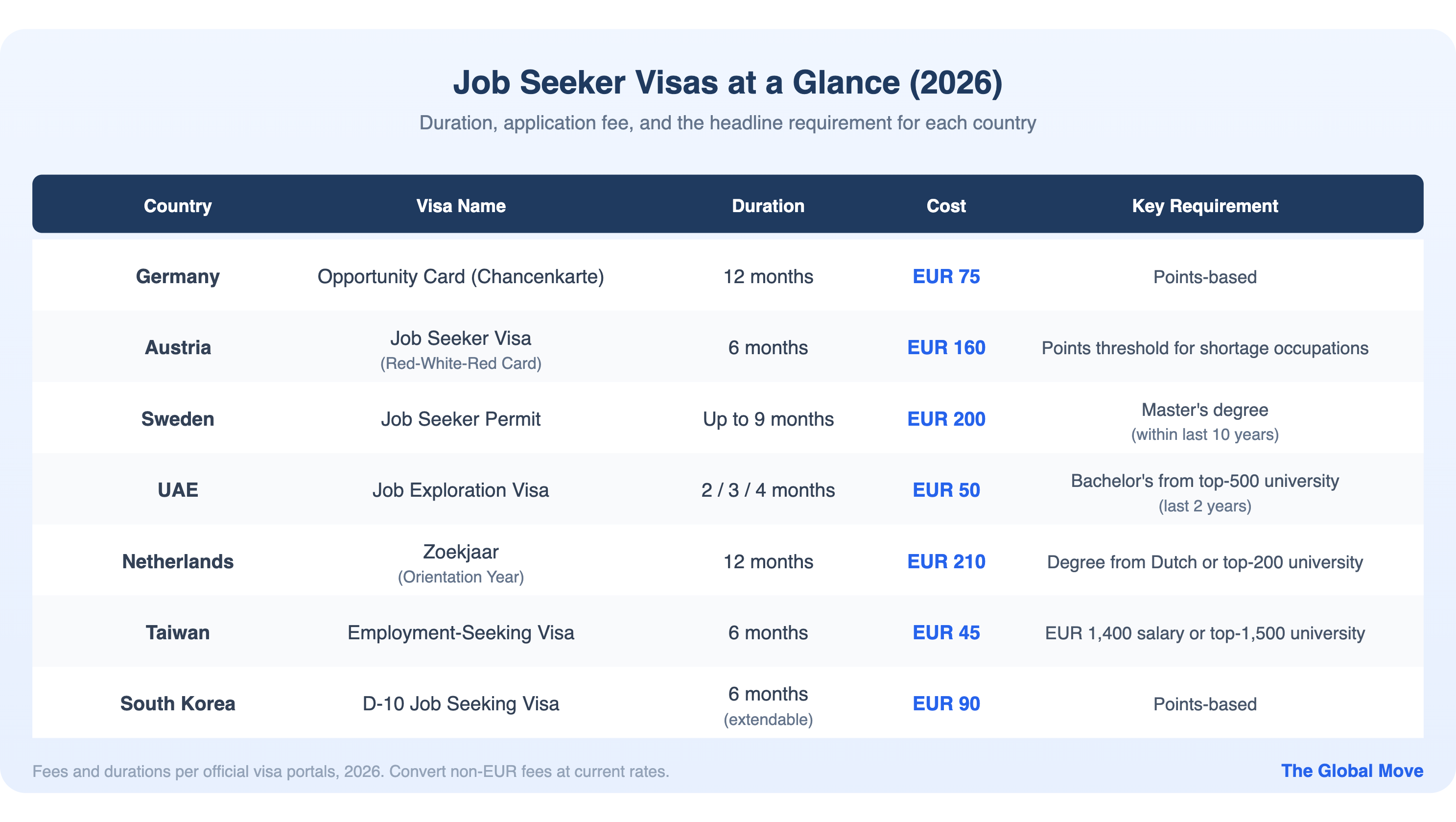
Top Countries Offering Fast Work Visas in 2026 17
Credit: relocateme.substack.com
News And Updates For 2026
Canada has added more tech and health jobs to its fast-track list.
Germany now accepts more English-language applications.
UAE launched a 5-year Green Visa for freelancers and entrepreneurs.
Australia simplified the Global Talent Visa invitation stage.
Singapore expanded the ONE Pass for more professions.
Portugal introduced a digital nomad visa with 2-week processing.
The fastest countries, like Singapore and Estonia, can approve work visas in as little as 3–7 days if your documents are complete and you meet all requirements. Most top countries on this list process work visas in 1–4 weeks.
Do I Need A Job Offer To Apply For A Fast Work Visa?
In most cases, yes. Countries like Canada, Australia, and New Zealand require a job offer. However, the UAE Green Visa, Portugal’s Job Seeker Visa, and Estonia’s Startup Visa allow you to apply without a traditional job offer.
Can My Family Join Me On A Fast Work Visa?
Yes, most countries let you bring your spouse and children. Some, like Canada and the UK, offer open work or study permits for family members. Always check the specific rules for your chosen country.
What Are The Most Common Reasons For Work Visa Delays?
The biggest causes are incomplete paperwork, missing translations, and choosing the wrong visa type. Double-check requirements and always use official checklists.
Which Country Is Best For Tech Professionals Seeking A Fast Work Visa?
Canada, Estonia, and Portugal are top choices for tech professionals in 2026. They have fast-track programs, high demand, and digital application systems.
—
Moving abroad for work is one of the biggest decisions you’ll ever make. Choosing a country with a fast, reliable work visa can save you months of waiting and stress. Remember to check requirements, prepare your documents, and apply early. With the right strategy and a bit of research, you’ll start your new career adventure in record time.