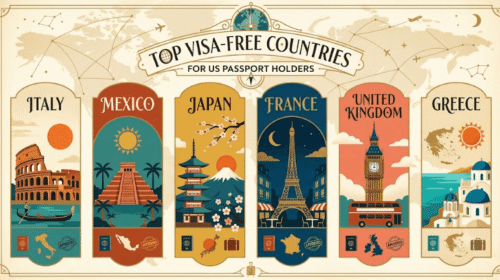










Top Visa Free Countries for US Passport Holders
Traveling the world is easier today than ever, especially if you hold a U.S. passport. In 2026, Americans can visit more countries without needing a visa than almost any other nationality. But the list of visa-free destinations changes every year. Knowing where you can go, how long you can stay, and what rules to follow helps you plan your trips better and avoid surprises.
This article gives you updated, clear information about the top visa-free countries for U.S. passport holders in 2026. We’ll cover the most popular destinations, useful travel tips, practical insights, and common mistakes. You’ll also see tables comparing stay limits, entry requirements, and travel highlights. Whether you’re looking for beaches, history, adventure, or culture, you’ll find options to suit every style. Let’s explore where your U.S. passport can take you next.
Why U.s. Passport Holders Have So Many Visa-free Options
The U.S. passport is ranked among the world’s strongest for visa-free travel. According to the Henley Passport Index and official government sources, Americans can enter over 185 countries and territories without a pre-arranged visa in 2026. This high number comes from international agreements, strong diplomatic relations, and the U.S.’s global influence.
Visa-free travel means you do not need to apply ahead of time or pay extra fees. Sometimes, you may need to fill out an arrival form or get a simple “visa on arrival. ” Other times, you just walk in.
The rules can be different even in nearby countries, so checking each destination before you go is essential.
How Visa-free Travel Works
When you enter a visa-free country, you usually show your U.S. passport at the border, answer basic questions, and get a stamp in your passport. Each country sets its own rules about:
-
- Maximum stay (often 30, 60, or 90 days)
-
- Purpose of visit (tourism, business, transit)
-
- Entry requirements (return ticket, proof of funds)
-
- Extensions (sometimes allowed, sometimes not)
Some countries ask for an online authorization (like ETAs or ESTAs), which is not a visa but still a requirement. Always check official sources for updates, because rules can change quickly.
Top Visa-free Countries For U.s. Passport Holders In 2026
Here are the top 20 visa-free destinations for Americans in 2026. These places are popular for their culture, nature, safety, and easy entry. For each country, you’ll find practical info on entry, highlights, and stay limits.
1. United Kingdom
Americans can visit the UK (England, Scotland, Wales, Northern Ireland) for up to 6 months without a visa. You must prove you’re a tourist and have enough money for your stay. Entry is usually smooth, but border officers may ask about your plans.
Travel tip: Don’t overstay, or you could face a ban. The UK is strict about return tickets and accommodation details.
2. France
France allows U.S. tourists to stay 90 days within any 180-day period. This includes all Schengen countries, so you can move freely across much of Europe. No visa is needed for short visits.
Travel tip: If you want to stay longer, apply for a long-stay visa before leaving the U.S.
3. Japan
Japan lets Americans visit for 90 days visa-free for tourism or business. You must show a return ticket and sometimes proof of funds.
Travel tip: Japan recently relaxed entry rules, making it easier to visit. Check for updates on health requirements.
4. Italy
Like France, Italy is part of the Schengen Area. U.S. travelers can visit for up to 90 days. The same rules apply across Schengen countries.
Travel tip: Italian border officers may ask for travel insurance, so bring proof just in case.
5. Spain
Spain offers 90 days in any 180-day period for U.S. passport holders. You can visit other Schengen nations during your stay.
Travel tip: Spain’s airports are busy in summer. Arrive early to avoid long lines at passport control.
6. Germany
Germany welcomes Americans for 90 days visa-free. The country is famous for its history, castles, and efficient trains.
Travel tip: Always carry your passport. Police sometimes check IDs in public places.
7. Mexico
Mexico allows U.S. visitors to stay up to 180 days. No visa is needed for tourism, but you must fill out a Forma Migratoria Multiple (FMM) on arrival.
Travel tip: Keep your FMM card safe. You must return it when leaving Mexico.
8. Canada
Canada is visa-free for Americans, with a 6-month maximum stay. Entry is easy, but border officers can ask for proof of funds and return plans.
Travel tip: If driving, bring proof of car insurance and registration.
9. Greece
Greece, part of the Schengen Area, offers 90 days visa-free. You can island-hop and explore ancient sites without paperwork.
Travel tip: Ferry schedules can change quickly. Check online before planning island trips.
10. Australia
Australia recently introduced an ETA (Electronic Travel Authorization) for U.S. citizens. It’s not a visa, but you must apply online before your trip. The ETA allows 90 days per visit.
Travel tip: Apply for the ETA at least one week before departure to avoid delays.
11. New Zealand
Americans can visit New Zealand for 90 days with an NZeTA (New Zealand Electronic Travel Authority). Apply online before your trip.
Travel tip: New Zealand is strict about bringing food or plants. Declare everything at customs.
12. South Korea
South Korea offers 90 days visa-free for U.S. tourists. You may need a K-ETA (Korea Electronic Travel Authorization) before arrival.
Travel tip: Seoul’s airport is among the world’s best. Use free transit tours if you have a long layover.
13. Singapore
Singapore allows U.S. passport holders to stay up to 90 days without a visa. It’s a hub for business and travel in Asia.
Travel tip: Singapore fines for littering and chewing gum. Follow local rules closely.
14. Thailand
Thailand is visa-free for Americans for up to 30 days by air, and 15 days if entering by land. Extensions are possible at local immigration offices.
Travel tip: If you want to stay longer, apply for an extension or leave and re-enter.
15. Israel
Israel allows Americans to visit for up to 90 days. Entry is easy, but security checks can be strict.
Travel tip: Passport stamps from Israel may cause problems when traveling to some Arab countries.
16. Brazil
Brazil recently waived visa requirements for U.S. tourists. You can stay up to 90 days, renewable for another 90.
Travel tip: Carry proof of exit tickets. Brazil’s immigration sometimes checks for onward travel.
17. Argentina
Argentina offers 90 days visa-free for Americans. No paperwork is needed for short stays.
Travel tip: Buenos Aires has many free walking tours—great for first-time visitors.
18. Chile
Chile lets U.S. citizens stay up to 90 days visa-free. Entry is quick, but you may be asked about your travel plans.
Travel tip: Patagonia’s weather is unpredictable. Pack layers for every season.
19. South Africa
South Africa allows 90 days for tourism without a visa. You must show a return ticket and proof of funds.
Travel tip: Some areas require yellow fever vaccination certificates. Check before visiting.
20. Peru
Peru gives Americans up to 183 days visa-free. This is longer than most South American countries.
Travel tip: Altitude sickness is common in Cusco and Machu Picchu. Drink water and take it slow.
Comparing Stay Limits And Entry Requirements
To help you plan, here’s a quick comparison of maximum stay periods and entry requirements for the top visa-free countries.
| Country | Max Stay | Entry Requirement |
|---|---|---|
| United Kingdom | 6 months | Proof of funds, return ticket |
| France | 90 days (Schengen) | None |
| Japan | 90 days | Return ticket |
| Mexico | 180 days | FMM form |
| Canada | 6 months | Proof of funds |
| Australia | 90 days | ETA |
| New Zealand | 90 days | NZeTA |
| Thailand | 30 days (air) | None |
| Peru | 183 days | None |
This table shows that most countries offer 90 days or more, but a few (like Mexico and Peru) allow longer stays. Some require simple online authorizations, while others need only your passport.
Visa-free Travel In The Schengen Area
The Schengen Area covers most of Europe, including France, Germany, Italy, Spain, Greece, and more. U.S. passport holders can travel freely for 90 days within any 180-day period. You don’t need a separate visa for each country.
Non-obvious Insight: Schengen Counting Rules
Many travelers get confused by the Schengen 90/180 rule. It means you can spend 90 days total in the Schengen Area, then you must leave for 90 days before returning. The clock doesn’t reset when you exit—your time is counted over the last 180 days. Overstaying can lead to fines and bans.
Example
If you visit France for 30 days, then Germany for 30 days, then Spain for 30 days, you’ve used your 90 days. You must leave the Schengen Area for 90 days before you can return.
Key Benefits Of Visa-free Travel For U.s. Citizens
Visa-free travel offers many advantages:
-
- Flexibility: You can change plans or visit multiple countries without extra paperwork.
-
- Cost savings: No visa fees, no waiting for approvals.
-
- Faster entry: Short lines at airports and border crossings.
-
- Spontaneity: Decide last-minute to travel and still get in.
This makes vacation planning and business trips easier and less stressful.
Common Mistakes When Using Visa-free Entry
Many U.S. travelers make errors that can cause problems. Here are some real examples:
-
- Overstaying: If you stay longer than allowed, you may get banned from returning or fined.
-
- Missing paperwork: Some countries require online forms (ETA, NZeTA, FMM) even if no visa is needed.
-
- Not checking entry rules: Requirements change often. Always check official government sites before your trip.
-
- Ignoring local laws: Some countries have strict rules about customs, behavior, or health checks.
Non-obvious Insight: Entry May Be Refused
Even with visa-free status, border officers can deny entry if you seem suspicious, lack funds, or don’t have a return ticket. Always be polite and prepared.
Travel Trends For U.s. Passport Holders In 2026
Recent news and travel data show new trends for Americans in 2026:
-
- Asian destinations like Japan, South Korea, and Singapore are more popular due to relaxed entry rules and better flight connections.
-
- South America is attracting more tourists because of longer stay limits (Peru, Mexico, Brazil).
-
- Remote work and “digital nomad” lifestyles are rising. Countries like Portugal and Greece offer special visas, but basic tourism is still visa-free.
-
- Health checks and online authorizations are common after COVID-19. Always check for new requirements.
Comparison: Visa-free Vs. Visa-on-arrival And Evisas
Visa-free travel is not the same as visa-on-arrival or eVisas. Here’s a quick comparison:
| Type | Process | Cost | Wait Time | Example Countries |
|---|---|---|---|---|
| Visa-Free | Show passport | Free | Instant | UK, France, Mexico |
| Visa-on-Arrival | Apply at border | $20–$60 | 10–30 min | Turkey, Cambodia |
| eVisa | Apply online | $25–$80 | 1–7 days | India, Vietnam |
Visa-free is the easiest and fastest option for U. S. travelers, but sometimes other types are needed for longer stays or work purposes.

Credit: www.myvietnamvisa.com
Essential Tips For Visa-free Travel
Traveling without a visa is simple, but these tips will help you avoid problems:
-
- Check entry rules before every trip. Official sites give the latest updates.
-
- Have proof of onward travel. Many countries ask for a return ticket.
-
- Carry your passport everywhere, especially in Europe and Asia.
-
- Respect local laws. Some countries have strict rules about alcohol, behavior, or dress.
-
- Keep travel insurance. Some destinations require proof, and it’s useful in emergencies.
Example: Health And Safety
In countries like Japan and South Korea, health checks are common at airports. Carry vaccination certificates if needed. For South Africa, yellow fever vaccination is required in some regions.
How To Extend Your Stay Legally
If you want to stay longer than the visa-free limit, you usually need to:
-
- Apply for an extension at local immigration offices
-
- Leave and re-enter the country
-
- Apply for a long-stay visa before traveling
Each country has different rules. For example, Thailand allows extensions for 30 days, but the UK is strict and rarely allows extensions.
Popular Activities In Visa-free Countries
Here are some highlights for each top destination:
-
- UK: Museums, castles, countryside walks
-
- France: Wine tours, art galleries, beaches
-
- Japan: Temples, cherry blossoms, shopping
-
- Mexico: Beaches, Mayan ruins, food
-
- Canada: National parks, festivals, skiing
-
- Italy: Roman ruins, cooking classes, coastlines
-
- Spain: Flamenco, tapas, historic cities
-
- Germany: Oktoberfest, castles, hiking
-
- Australia: Great Barrier Reef, surfing, wildlife
-
- New Zealand: Lord of the Rings tours, hiking, Maori culture
-
- South Korea: Palaces, shopping, K-pop
-
- Singapore: Gardens, food markets, business events
-
- Thailand: Islands, temples, street food
-
- Israel: Holy sites, Dead Sea, nightlife
-
- Brazil: Carnival, Amazon, beaches
-
- Argentina: Tango, glaciers, wine
-
- Chile: Atacama Desert, Patagonia, skiing
-
- South Africa: Safaris, vineyards, Cape Town
-
- Peru: Machu Picchu, Amazon, culture
Unique Insights For U.s. Travelers
Many Americans don’t realize:
-
- Stay limits include all Schengen countries together, not per country.
-
- Entry may be denied even if you meet all requirements, especially if you lack a return ticket.
-
- Travel insurance is recommended even if not required.
Travelers often miss these points, leading to confusion or problems at the border.

Credit: www.reddit.com
Visa-free Travel: What’s Changing In 2026?
Some countries update their rules often. For 2026, the biggest changes include:
-
- ETAs for Australia, New Zealand, and South Korea: These are required for entry but are not traditional visas.
-
- Brazil’s visa waiver: Americans can now enter for tourism without a visa.
-
- Health checks: More countries require proof of vaccination or health status.
-
- Digital nomad visas: Some countries offer special visas for remote workers, but these are separate from visa-free tourism.
For the latest changes, check trusted sources like U.S. Department of State before booking.
Data Table: Visa-free Stay Limits By Region
Here’s a regional summary for U.S. passport holders:
| Region | Max Stay | Popular Countries |
|---|---|---|
| Europe (Schengen) | 90 days | France, Italy, Spain, Germany |
| Asia | 90 days | Japan, South Korea, Singapore |
| North America | 6 months | Canada, Mexico |
| South America | 90–183 days | Brazil, Argentina, Peru |
| Oceania | 90 days | Australia, New Zealand |
| Africa | 90 days | South Africa |
Most regions offer similar stay limits, but North and South America sometimes allow longer visits.
How To Maximize Your Visa-free Travel
To make the most of your U.S. passport:
-
- Plan trips around maximum stay limits
-
- Visit multiple countries in one region (like Europe or Asia)
-
- Avoid overstaying—track your days carefully
-
- Use online authorizations (ETAs, FMMs) for faster entry
Example: Multi-country Europe Trip
Start in France, spend 30 days, then visit Italy for 30 days, then Spain for 30 days. That’s the full Schengen limit. After 90 days, leave for the UK (outside Schengen) and stay up to 6 months.
Frequently Asked Questions
Can I Work Or Study In Visa-free Countries?
No. Visa-free entry is for tourism or short business trips. To work or study, you must apply for a separate visa.
What Happens If I Overstay My Visa-free Period?
Overstaying can lead to fines, deportation, or bans on future visits. Always check your allowed days and leave before your limit.
Do I Need Travel Insurance For Visa-free Countries?
Some countries require it, but it’s always recommended. It protects you in case of illness, accidents, or emergencies.
Can I Enter A Visa-free Country With A One-way Ticket?
Many countries require proof of onward travel. A one-way ticket can lead to entry denial. Always carry a return or onward ticket.
How Often Do Visa-free Rules Change?
Rules change every year or more often. Check official government websites for updates before every trip.
Traveling with a U.S. passport in 2026 opens doors to many exciting destinations. Visa-free access makes trips simpler, faster, and less expensive. But rules change, and each country has unique requirements. By planning ahead, respecting local laws, and keeping track of your stay limits, you’ll enjoy smooth, memorable journeys around the world.

Credit: www.aljazeera.com