Time 9:27 am, Tuesday, 14 July 2026

Ecological Symbiosis: How Cattle Grazing is Rescuing Britain’s Rarest Butterfly

Zahidul islam
  • Update Time : 09:13:36 am, Friday, 10 July 2026
  • / 11 Times Read

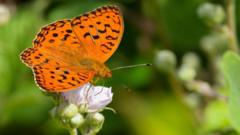
The High Brown Fritillary (Argynnis adippe), once a common sight across the British countryside, has faced a precipitous decline, teetering on the edge of extinction. This collapse is primarily attributed to the loss of its specialized habitat, which requires a delicate balance of sun-drenched clearings and specific flora. The butterfly relies heavily on the common dog-violet (Viola riviniana) for its larvae, but these plants are often choked out by the aggressive encroachment of bracken (Pteridium aquilinum), a hardy fern that dominates unmanaged landscapes.

Conservationists have turned to an unlikely partner in this struggle: cattle. By introducing controlled grazing, conservation organizations are mimicking the natural disturbance patterns that once kept the landscape open. Cattle serve as essential ecosystem engineers; their grazing suppresses the rampant growth of bracken, preventing it from forming a dense, suffocating canopy over the forest floor. This intervention creates the necessary light gaps that allow the dog-violet to flourish. Furthermore, the trampling effect of cattle hooves exposes bare soil, which provides the ideal micro-habitat for violet seeds to germinate and establish themselves.

This method of ‘conservation grazing’ is a masterclass in ecological restoration. By utilizing traditional farming practices, conservationists are not only saving the High Brown Fritillary but also promoting biodiversity across the woodland edge. The success of this project hinges on ‘moderation’—too much grazing could destroy the habitat, while too little allows the bracken to return. Through rigorous monitoring and careful management of livestock density, experts have managed to foster a resurgence in butterfly populations. This initiative highlights a critical lesson in modern conservation: sometimes, the most effective technology for saving a species is the reintroduction of natural, traditional behaviors into a landscape that has been neglected for decades. As climate change shifts habitat viability, such adaptive, nature-based solutions become increasingly vital for the survival of Britain’s most vulnerable wildlife.

Share The News

Your comment

Your email address will not be published. Required fields are marked *

Save your email and other information.

Uploader's Information

Zahidul islam

**Zahidul Islam** is the Founder and Editor of **NewsHot24**, a digital news platform dedicated to delivering accurate, timely, and trustworthy news. He specializes in covering technology, artificial intelligence, business, world news, entertainment, sports, and trending topics. With a strong focus on fact-checking, editorial quality, and reader-first journalism, Zahidul creates well-researched, original content that keeps audiences informed. He is passionate about digital publishing, SEO, and building a reliable online news source that meets modern journalism standards. His mission is to provide credible, easy-to-understand reporting while maintaining transparency, accuracy, and editorial integrity for readers around the world.

Ecological Symbiosis: How Cattle Grazing is Rescuing Britain’s Rarest Butterfly

Update Time : 09:13:36 am, Friday, 10 July 2026

The High Brown Fritillary (Argynnis adippe), once a common sight across the British countryside, has faced a precipitous decline, teetering on the edge of extinction. This collapse is primarily attributed to the loss of its specialized habitat, which requires a delicate balance of sun-drenched clearings and specific flora. The butterfly relies heavily on the common dog-violet (Viola riviniana) for its larvae, but these plants are often choked out by the aggressive encroachment of bracken (Pteridium aquilinum), a hardy fern that dominates unmanaged landscapes.

Conservationists have turned to an unlikely partner in this struggle: cattle. By introducing controlled grazing, conservation organizations are mimicking the natural disturbance patterns that once kept the landscape open. Cattle serve as essential ecosystem engineers; their grazing suppresses the rampant growth of bracken, preventing it from forming a dense, suffocating canopy over the forest floor. This intervention creates the necessary light gaps that allow the dog-violet to flourish. Furthermore, the trampling effect of cattle hooves exposes bare soil, which provides the ideal micro-habitat for violet seeds to germinate and establish themselves.

This method of ‘conservation grazing’ is a masterclass in ecological restoration. By utilizing traditional farming practices, conservationists are not only saving the High Brown Fritillary but also promoting biodiversity across the woodland edge. The success of this project hinges on ‘moderation’—too much grazing could destroy the habitat, while too little allows the bracken to return. Through rigorous monitoring and careful management of livestock density, experts have managed to foster a resurgence in butterfly populations. This initiative highlights a critical lesson in modern conservation: sometimes, the most effective technology for saving a species is the reintroduction of natural, traditional behaviors into a landscape that has been neglected for decades. As climate change shifts habitat viability, such adaptive, nature-based solutions become increasingly vital for the survival of Britain’s most vulnerable wildlife.