Time 9:25 am, Tuesday, 14 July 2026

Tensions Escalate as Mojtaba Khamenei Vows Inevitable Retaliation Following Father’s Burial

Zahidul islam
  • Update Time : 07:43:25 pm, Saturday, 11 July 2026
  • / 14 Times Read

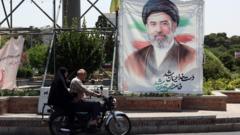
In a development that threatens to further destabilize an already volatile Middle East, Mojtaba Khamenei, the influential son of Iran’s late Supreme Leader, has issued a stark warning of “inevitable” retaliation following the burial of his father, Ayatollah Ali Khamenei. Speaking shortly after the funeral ceremonies, the younger Khamenei declared that Tehran would exact severe vengeance for the killing of the supreme leader, an event that reportedly took place during the opening hours of a direct military confrontation involving Iran, Israel, and the United States. The declaration has heightened fears of an all-out regional war with catastrophic global consequences.

The circumstances surrounding the death of the Supreme Leader remain highly contested, but Iranian state media have framed the incident as a targeted strike conducted during the initial wave of joint US-Israeli military operations. For months, tensions in the region have simmered at a boiling point, fueled by stalled diplomatic efforts over Iran’s nuclear ambitions, frequent skirmishes between Israeli forces and Tehran-backed proxy groups, and increased naval deployments by the United States in the Persian Gulf. The transition from proxy warfare to direct confrontation marks a dangerous new chapter in Middle Eastern geopolitics.

Mojtaba Khamenei’s prominent public address at this critical juncture is seen by many international analysts as a dual-purpose move. Beyond rallying the domestic population and the Islamic Revolutionary Guard Corps (IRGC) for a prolonged conflict, his statements are interpreted as an assertion of political authority. Long regarded as a powerful figure operating within the shadows of Iran’s clerical establishment, Mojtaba has frequently been mentioned as a leading candidate to succeed his father. By positioning himself as the voice of national resolve and the architect of the promised retaliation, he appears to be consolidating his influence over the country’s security apparatus during an unprecedented national crisis.

The threat of “inevitable” vengeance has put defense forces across the region on high alert. Military strategists warn that Iranian retaliation could take several forms, ranging from coordinated ballistic missile strikes to asymmetric warfare conducted by regional allies, including Hezbollah in Lebanon, the Houthi movement in Yemen, and various paramilitary groups in Iraq and Syria. Furthermore, any escalation in the Persian Gulf could disrupt shipping lanes in the Strait of Hormuz, a vital maritime chokepoint through which a significant portion of the world’s oil supply passes, potentially triggering a global economic shock.

In response to the escalating rhetoric, international leaders have urged maximum restraint. The United Nations Security Council has called for an emergency session to address the crisis, while diplomatic envoys from Europe and regional powers have scrambled to establish communication channels to prevent further escalation. However, with both sides locked in a cycle of mutual defiance and military mobilization, the prospects for a diplomatic breakthrough appear increasingly slim, leaving the international community braced for the next phase of the conflict.

Share The News

Your comment

Your email address will not be published. Required fields are marked *

Save your email and other information.

Uploader's Information

Zahidul islam

**Zahidul Islam** is the Founder and Editor of **NewsHot24**, a digital news platform dedicated to delivering accurate, timely, and trustworthy news. He specializes in covering technology, artificial intelligence, business, world news, entertainment, sports, and trending topics. With a strong focus on fact-checking, editorial quality, and reader-first journalism, Zahidul creates well-researched, original content that keeps audiences informed. He is passionate about digital publishing, SEO, and building a reliable online news source that meets modern journalism standards. His mission is to provide credible, easy-to-understand reporting while maintaining transparency, accuracy, and editorial integrity for readers around the world.

Tensions Escalate as Mojtaba Khamenei Vows Inevitable Retaliation Following Father’s Burial

Update Time : 07:43:25 pm, Saturday, 11 July 2026

In a development that threatens to further destabilize an already volatile Middle East, Mojtaba Khamenei, the influential son of Iran’s late Supreme Leader, has issued a stark warning of “inevitable” retaliation following the burial of his father, Ayatollah Ali Khamenei. Speaking shortly after the funeral ceremonies, the younger Khamenei declared that Tehran would exact severe vengeance for the killing of the supreme leader, an event that reportedly took place during the opening hours of a direct military confrontation involving Iran, Israel, and the United States. The declaration has heightened fears of an all-out regional war with catastrophic global consequences.

The circumstances surrounding the death of the Supreme Leader remain highly contested, but Iranian state media have framed the incident as a targeted strike conducted during the initial wave of joint US-Israeli military operations. For months, tensions in the region have simmered at a boiling point, fueled by stalled diplomatic efforts over Iran’s nuclear ambitions, frequent skirmishes between Israeli forces and Tehran-backed proxy groups, and increased naval deployments by the United States in the Persian Gulf. The transition from proxy warfare to direct confrontation marks a dangerous new chapter in Middle Eastern geopolitics.

Mojtaba Khamenei’s prominent public address at this critical juncture is seen by many international analysts as a dual-purpose move. Beyond rallying the domestic population and the Islamic Revolutionary Guard Corps (IRGC) for a prolonged conflict, his statements are interpreted as an assertion of political authority. Long regarded as a powerful figure operating within the shadows of Iran’s clerical establishment, Mojtaba has frequently been mentioned as a leading candidate to succeed his father. By positioning himself as the voice of national resolve and the architect of the promised retaliation, he appears to be consolidating his influence over the country’s security apparatus during an unprecedented national crisis.

The threat of “inevitable” vengeance has put defense forces across the region on high alert. Military strategists warn that Iranian retaliation could take several forms, ranging from coordinated ballistic missile strikes to asymmetric warfare conducted by regional allies, including Hezbollah in Lebanon, the Houthi movement in Yemen, and various paramilitary groups in Iraq and Syria. Furthermore, any escalation in the Persian Gulf could disrupt shipping lanes in the Strait of Hormuz, a vital maritime chokepoint through which a significant portion of the world’s oil supply passes, potentially triggering a global economic shock.

In response to the escalating rhetoric, international leaders have urged maximum restraint. The United Nations Security Council has called for an emergency session to address the crisis, while diplomatic envoys from Europe and regional powers have scrambled to establish communication channels to prevent further escalation. However, with both sides locked in a cycle of mutual defiance and military mobilization, the prospects for a diplomatic breakthrough appear increasingly slim, leaving the international community braced for the next phase of the conflict.