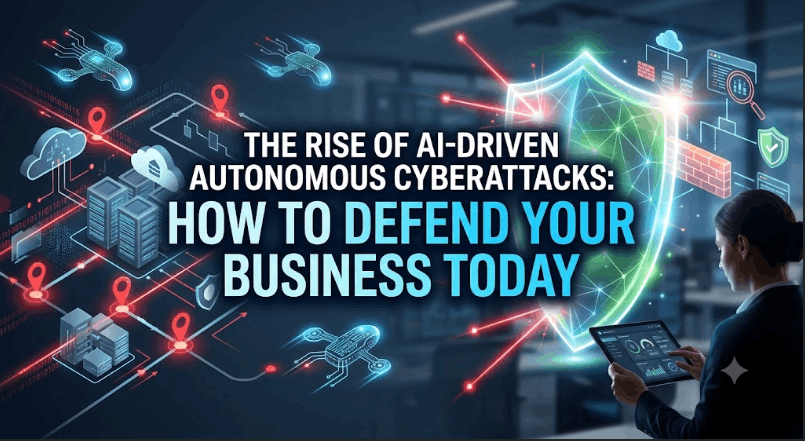










How Agentic AI Is Changing Cybersecurity Landscape in 2026: What You Need to Know
The world of cybersecurity is not the same as it was a few years ago. In 2026, Agentic AI is leading a major shift. This new technology is changing how we defend against cyber attacks, manage risks, and protect our digital lives. But what is Agentic AI, and how is it different from traditional AI? Why are companies, governments, and everyday people paying close attention? If you want to understand these changes, you’re in the right place.
This article explains the real impact of Agentic AI in cybersecurity. You will see how it works, why it’s powerful, and what you need to do to stay safe. We’ll cover new threats, smarter defenses, and the practical steps you can take.
You’ll also find real-world examples, data, and comparisons that help make sense of this fast-moving field.
What Is Agentic Ai? Why Is It Different?
Agentic AI is a new approach in artificial intelligence. Unlike older systems that just process data or follow simple commands, Agentic AI systems act as autonomous agents. They can make decisions, plan actions, and adapt to changing situations—almost like a digital helper that thinks for itself. In cybersecurity, this means Agentic AI can monitor networks, spot threats, and respond quickly without waiting for human input.
Traditional AI often needs human guidance. For example, if you set rules for a firewall, the AI follows them. But Agentic AI learns from experience. It can find new kinds of attacks, adjust defenses, and take action—even if the threat is something nobody has seen before.
Agentic AI is also proactive. It doesn’t wait for instructions or rely only on past data. These agents simulate possible scenarios, anticipate attacker moves, and prepare defenses ahead of time. This ability to “think ahead” is a huge leap from traditional AI, which usually reacts after something happens.
Key Differences: Agentic Vs. Traditional Ai
Here’s a simple comparison to show how Agentic AI stands out:
| Feature | Traditional AI | Agentic AI |
|---|---|---|
| Decision-making | Follows rules | Autonomous, adapts |
| Threat Detection | Known patterns | Discovers new threats |
| Response Speed | Human delay | Instant action |
| Learning | Static models | Continuous learning |
Agentic AI is not just smarter—it’s more active, flexible, and able to operate in complex environments. This is why it’s changing cybersecurity in big ways. It can also work across different systems—like cloud, mobile, and IoT—without needing separate setups. This versatility helps organizations protect all parts of their network, not just servers or websites.
The Current State Of Cybersecurity In 2026
Cyber threats are more serious than ever in 2026. Attacks are faster, smarter, and often hidden. Hackers use AI-powered tools to break into systems, steal data, and cause damage. Global losses from cybercrime are expected to reach $10.5 trillion this year, according to Cybersecurity Ventures.
Some common threats include:
- Ransomware: Hackers lock your files and demand money.
- Phishing: Fake emails trick people into sharing passwords.
- Zero-day attacks: New, unknown bugs are used to break security.
- Botnets: Networks of infected computers launch attacks.
Security teams struggle to keep up. There are too many alerts, not enough skilled workers, and attackers change tactics quickly. This is where Agentic AI becomes valuable.
Attackers are also targeting new areas. For example, smart devices like home cameras or thermostats are now common entry points. Agentic AI can monitor these devices and spot unusual activity, such as a camera trying to connect to a foreign server at odd hours.
In many cases, the speed and scale of attacks in 2026 make older defenses almost useless. Agentic AI fills these gaps by watching for subtle changes and reacting fast.
Credit: northwave-cybersecurity.com
How Agentic Ai Is Transforming Cybersecurity Defense
Agentic AI is not just a tool—it’s a game changer. Here are the main ways it is improving cybersecurity in 2026:
1. Real-time Threat Detection
Agentic AI can monitor huge networks and spot dangers as they happen. It doesn’t just look for known threats—it finds anomalies or strange behavior that could be signs of a new attack. For example, if a computer starts sending data to an unknown location, Agentic AI can investigate and block it instantly.
In 2026, many large companies use Agentic AI for this purpose. It reduces detection time from hours to seconds, stopping attacks before they spread.
Agentic AI also helps with insider threats. If an employee suddenly downloads large amounts of confidential data, the AI flags this behavior—even if there’s no clear sign of hacking. This early warning is vital for protecting sensitive information from both external and internal risks.
2. Autonomous Response
When Agentic AI finds a threat, it can act without waiting for a human. This includes blocking malicious traffic, isolating infected systems, or rolling back changes. The system learns from each event, so it gets better over time.
This autonomous response is critical because attacks often happen in seconds. Human teams simply can’t react fast enough.
For example, in a retail chain, Agentic AI stopped a fast-moving malware outbreak by quickly disconnecting affected cash registers and restoring safe backups. The business continued running without major disruption—a result that would have been impossible with human-only response.
3. Adaptive Defense Strategies
Agentic AI can change its defense methods based on the situation. If hackers try a new tactic, the AI tests different responses, picks the best one, and updates its strategy. This makes it very hard for attackers to succeed.
For example, in early 2026, a major bank faced a new kind of ransomware attack. Agentic AI quickly spotted the unusual activity, blocked the malware, and restored safe backups—all before the hackers could demand payment.
The adaptive nature also means Agentic AI can learn from attacks on other companies and adjust its own defenses. It shares threat intelligence in real time, building a “community shield” that grows stronger as more users join.
4. Deeper Analysis And Threat Intelligence
Agentic AI can analyze huge amounts of data, find patterns, and share insights with security teams. This helps organizations understand what threats are coming, where they are weak, and how to improve.
Many companies now use Agentic AI to build threat intelligence dashboards. These show real-time risks, trends, and predictions—helping leaders make smart choices.
Agentic AI goes beyond simple alerts. It can link together different events—like failed logins, strange emails, and suspicious file changes—to build a complete picture of an attack. This holistic view helps security teams prioritize their efforts and avoid chasing false alarms.
5. Automated Compliance And Risk Management
Following security rules and regulations is tough, especially with changing laws. Agentic AI can track compliance, flag risks, and help fix problems automatically. This saves time and reduces mistakes.
For instance, in the healthcare sector, Agentic AI checks that patient data is safe and follows privacy laws. If something is wrong, it alerts staff and suggests fixes.
It also manages risk scores for devices and users, flagging those that need extra protection. Agentic AI can even generate reports for regulators, reducing the workload for compliance teams and making audits smoother.
New Threats And Challenges Created By Agentic Ai
While Agentic AI is powerful, it also brings new risks:
1. Ai-powered Attacks
Hackers are using their own Agentic AI systems. These “malicious agents” can scan networks, find weak spots, and launch attacks faster than ever. Some even try to fool or disable defense AI.
For example, a hacker might use Agentic AI to change tactics mid-attack, making it harder for defenders to keep up. These attacks often test system boundaries, searching for overlooked vulnerabilities.
2. Adversarial Ai And Deepfakes
Agentic AI can be tricked by adversarial inputs—specially crafted data that makes the AI see things wrong. For example, fake images or signals can confuse security systems. Deepfake videos and audio are also used to create false evidence or scams.
A recent case involved deepfake voice recordings that tricked an executive into approving a fraudulent money transfer. Agentic AI must now learn to spot and block these advanced scams.
3. Data Poisoning
Attackers may try to “poison” the data Agentic AI uses for learning. If the AI trains on bad data, it can make mistakes or leave gaps in defense.
Data poisoning can happen slowly, with attackers feeding incorrect logs or subtle errors. Over time, this makes AI agents less effective, sometimes without anyone noticing. Regular data checks and “cleaning” are essential to maintain trust.
4. Over-reliance On Automation
Some companies trust Agentic AI too much and let humans step back. This is risky. If AI fails or is attacked, there may be no backup plan. Smart organizations keep human oversight, even with advanced AI.
One example is when AI mistakenly blocks a legitimate user, causing downtime for a business. Human intervention is needed to fix these cases and review decisions.
5. Ethical And Privacy Issues
Agentic AI collects and analyzes huge amounts of data. This raises questions about privacy, consent, and fairness. Regulations are changing, and companies must balance security with respect for user rights.
For instance, in education, Agentic AI might monitor student devices. Schools must ensure they do not violate privacy or create unfair profiles. Careful policies and transparency are needed to build trust.
Agentic Ai In Action: Real-world Examples
Agentic AI is not just theory. It’s used in real places, with real results:
Example 1: Protecting Financial Networks
In 2026, a large international bank faced a series of complex cyber attacks. Agentic AI monitored millions of transactions per day, detected unusual patterns, and responded instantly. The system stopped three major breaches, saving over $50 million in losses.
Additionally, the bank’s AI agent flagged unusual behavior by a third-party vendor, preventing a supply chain attack that could have spread to dozens of partners. This extra layer of protection shows how Agentic AI watches beyond just internal threats.
Example 2: Healthcare Data Security
Hospitals use Agentic AI to protect patient records. The AI checks for strange access, blocks unauthorized users, and ensures compliance with laws like HIPAA. One hospital avoided a major data leak thanks to its AI agent, which flagged the attack before any records were stolen.
Agentic AI also helped identify an employee using outdated passwords, prompting a security update that closed a risky gap. These small actions build overall resilience.
Example 3: Smart Cities
Modern cities use Agentic AI to guard public systems—traffic lights, power grids, and water supplies. When hackers tried to disrupt traffic signals, the AI agent detected the intrusion and switched controls to backup systems, preventing accidents.
In another case, Agentic AI spotted an unusual spike in water usage caused by a remote attack on pumps. The AI agent quickly alerted city staff, who fixed the issue before it harmed residents.
Comparing Agentic Ai Solutions In 2026
There are several Agentic AI platforms on the market. Here’s a look at how they compare:
| Platform | Key Features | Deployment Speed | Cost Range |
|---|---|---|---|
| CortexGuard | Autonomous response, threat intelligence, compliance tools | Fast (2-4 weeks) | $$$ |
| SentinelAI | Adaptive defense, deep analysis, real-time dashboards | Moderate (4-6 weeks) | $$ |
| SecureAgent | Network monitoring, automated patching, privacy controls | Fast (2-3 weeks) | $$ |
Most organizations pick platforms based on their needs, budget, and risk level. Fast deployment is important, but deeper features may cost more.
Some solutions also offer integration with existing tools, making it easier for companies to upgrade without replacing everything. Consider if the AI can work with your current systems, and whether it supports cloud or on-premises setups.

Credit: www.hiddenlayer.com
Key Benefits For Businesses And Individuals
Agentic AI offers several clear advantages for both companies and regular users:
- Faster detection and response: Reduces the time between attack and defense, limiting damage.
- Lower workload for humans: Automated tasks free up staff to focus on strategy.
- Better adaptation to new threats: AI learns from each event and updates defenses.
- Improved compliance: Helps follow laws and avoid fines.
- Stronger protection for personal data: Keeps information safe from hackers and leaks.
A less obvious benefit is resilience. Agentic AI helps businesses recover quickly after attacks, minimizing downtime and reputation loss. For individuals, Agentic AI can warn about unsafe apps or risky behavior, helping you avoid problems before they start.
What You Need To Do To Stay Safe In The Agentic Ai Era
Agentic AI is powerful, but it’s not magic. To get the most benefit and avoid risks, here are practical steps:
1. Choose Reliable Agentic Ai Solutions
Look for proven platforms with strong security records. Read reviews, ask for demos, and check how often they update their systems. If possible, talk to other users and get feedback on real-world performance.
2. Keep Human Oversight
Don’t let AI run everything alone. Set up clear rules, monitor decisions, and keep skilled staff involved.
Assign responsibility for reviewing AI actions and handling exceptions. This ensures problems get fixed quickly.
3. Update Training And Policies
Teach your team how Agentic AI works, what to watch for, and how to respond if something goes wrong. Update your cybersecurity policies to include AI risks.
Include regular drills or simulations with AI agents, so staff know how to handle unusual events.
4. Monitor Data Quality
Protect the data your AI uses. Check for signs of poisoning or manipulation, and use secure sources.
Set up alerts for unexpected changes in training data, and review logs for errors.
5. Balance Security And Privacy
Make sure your AI respects user privacy. Follow laws and get consent where needed.
Review what data the AI collects, and limit access to sensitive information. This builds trust with customers and users.
6. Stay Informed
Cyber threats change fast. Follow news, join industry groups, and keep learning about Agentic AI developments. For up-to-date research, visit Wikipedia.
Consider subscribing to cybersecurity alerts or newsletters from trusted organizations. This helps you spot new risks early.
Agentic Ai And Regulatory Changes
Governments are responding to Agentic AI by updating regulations. For example, the US and EU are introducing new rules about automated decision-making, data privacy, and reporting breaches. Businesses must keep up with these changes to avoid fines or legal trouble.
In 2026, some key regulatory trends include:
- Mandatory reporting of AI-driven attacks
- Rules about explainability—companies must show how their AI makes decisions
- Limits on AI collecting personal data without consent
Organizations should work with legal experts to stay compliant and avoid risks.
New laws may also require regular audits of AI systems. If your business uses Agentic AI, make sure you have documentation for how it works, how decisions are made, and how data is managed. This prepares you for inspections or investigations.
Agentic Ai Vs. Human Experts: Complement Or Replace?
Agentic AI is fast and accurate, but human experts are still essential. AI can handle routine tasks, monitor networks, and respond to common threats. But humans are needed for complex decisions, ethical issues, and creative problem-solving.
Here’s a comparison of strengths:
| Task | Agentic AI Strength | Human Expert Strength |
|---|---|---|
| Routine monitoring | Speed, accuracy | Limited |
| Complex investigation | Pattern analysis | Deep reasoning, context |
| Ethical decisions | Rule-based | Judgment, empathy |
| Response to new threats | Adaptation | Innovation |
Smart organizations use both Agentic AI and human experts together. This creates stronger, more flexible defense. Human experts also help explain AI actions to regulators or customers, making the technology more transparent and trustworthy.
Practical Insights Most Beginners Miss
Many new users think Agentic AI is “set and forget. ” But it needs regular updates, checks, and tuning. Ignoring these steps can lead to blind spots.
Another common mistake is thinking Agentic AI is immune to hacking. In reality, attackers target AI itself. Protect your AI systems with strong passwords, secure servers, and regular audits.
A less obvious insight: Agentic AI needs clear goals and boundaries. If you don’t set limits, it may act in ways you don’t expect—for example, blocking too many users or collecting unnecessary data. Always define what the AI should and shouldn’t do.
Also, beginners often miss the need for “explainability. ” If you can’t explain how your Agentic AI makes decisions, you may face trouble with regulators or lose customer trust. Use tools or dashboards that show AI reasoning.
Future Trends: What’s Next In Agentic Ai Cybersecurity?
In 2026, Agentic AI is still evolving. Here are some trends to watch:
1. Cross-industry Collaboration
Companies are sharing threat data and AI models across industries. This helps everyone defend better.
Government agencies and private firms sometimes pool resources to fight large-scale attacks. This “joint defense” is growing fast.
2. Ai Explainability
New tools make it easier to understand how Agentic AI makes decisions. This builds trust and helps meet regulations.
Explainable AI also helps security teams review actions and spot mistakes faster.
3. Human-ai Teaming
Security teams work alongside Agentic AI, not just supervise. This leads to smarter, faster responses.
Some firms have “AI coaches” who help staff get the most from Agentic AI, improving teamwork and results.
4. Smarter Attackers
Hackers use their own Agentic AI to test and bypass defenses. Security must stay one step ahead.
Attackers may even collaborate, sharing AI tools on underground forums. This means defenders must keep improving their own agents.
5. Ai-driven Security Audits
Agentic AI can run security checks, find weak spots, and suggest improvements. This makes audits faster and more thorough.
Automated audits also help small businesses, which may lack resources for manual reviews.
Credit: www.firecrawl.dev
Frequently Asked Questions
What Is Agentic Ai In Cybersecurity?
Agentic AI refers to autonomous AI systems that act as agents, making decisions and adapting to new threats without constant human guidance. In cybersecurity, this means faster detection, smarter responses, and continuous learning.
How Does Agentic Ai Improve Threat Detection?
Agentic AI monitors networks in real time, finds unusual patterns, and responds instantly. It can spot unknown attacks that traditional systems miss, reducing the time between attack and defense.
Are There Risks In Using Agentic Ai For Cybersecurity?
Yes. Agentic AI can be targeted by attackers, fooled by adversarial inputs, or affected by bad training data. Over-reliance on automation and privacy concerns are other risks. Regular oversight and strong security practices are important.
Will Agentic Ai Replace Human Cybersecurity Experts?
Agentic AI can automate routine tasks and improve defense, but humans are still needed for complex analysis, ethical decisions, and creative problem-solving. The best results come from combining both.
How Can I Prepare My Organization For Agentic Ai Cybersecurity?
Choose reliable AI platforms, keep human oversight, train your team, monitor data quality, and stay up to date with regulations. Balance security with privacy, and keep learning as threats evolve.
Agentic AI is changing cybersecurity fast. By understanding its strengths, risks, and practical steps, you can protect your business and personal data in 2026 and beyond. Stay informed, stay prepared, and use both technology and human skill to stay ahead.
ChatGPT Superapp Update 2026: Next-Gen AI Models Set to Replace Apps