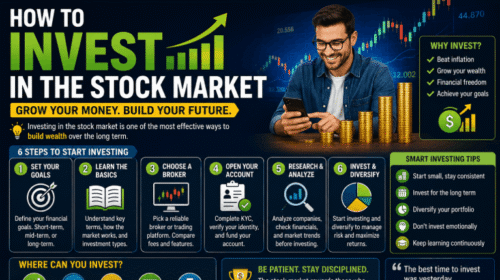










Investing in the stock market can seem complicated—especially with new trends, technologies, and risks emerging every year. If you’re thinking about how to invest in the stock market in 2026, you’re not alone. Many people want to grsow their money, but they worry about picking the wrong stocks, losing money, or not understanding the market. The good news is, investing is more accessible than ever. With the right knowledge, tools, and mindset, you can start building wealth—even if you’re not a finance expert.
This article is your complete, human-friendly guide to navigating the stock market in 2026. We’ll cover everything you need: the basics, new trends, practical steps, key mistakes to avoid, and strategies for different goals. We’ll also look at real examples, clear data, and FAQs to help you invest with more confidence. Whether you’re just starting or want to refresh your approach, you’ll find practical advice tailored for today’s fast-changing market.
Why Invest In The Stock Market In 2026?
Investing in stocks is one of the most reliable ways to grow your money over time. Even with the ups and downs, stock markets have historically given better returns than savings accounts or most other investments. In 2026, several factors make the market especially interesting:
-
- Digital access: You can invest easily using apps and online brokers.
-
- Global markets: You’re not limited to your home country—global stocks are just a click away.
-
- Smart tools: Artificial intelligence (AI) helps you analyze stocks and manage risk.
-
- Low-cost investing: Fees are lower than ever, so more of your money can grow.
According to a 2026 report from Statista, the number of retail investors worldwide grew by 16% in just one year, and more young people are investing than ever before. This means more innovation, more information, and more opportunities for everyone.
Understanding The Stock Market: The Basics
Before you invest, it’s important to understand how the stock market works. The stock market is a place where you can buy and sell shares of companies. A share is a small piece of ownership in a company. When you buy shares, you become a part-owner and can benefit if the company does well.
Key Market Terms
-
- Stock Exchange: The marketplace where stocks are bought and sold (like the New York Stock Exchange or NASDAQ).
-
- Index: A group of stocks used to measure market performance (like the S&P 500 or Dow Jones).
-
- Dividend: A payment some companies give to shareholders from their profits.
-
- Bull Market: When prices are rising and investors are optimistic.
-
- Bear Market: When prices are falling and investors are worried.
How Stocks Make You Money
There are two main ways to earn:
-
- Price Growth: If you buy a stock at $100 and it rises to $150, you make a $50 profit if you sell.
-
- Dividends: Some companies pay you a part of their earnings—like a reward for investing.
Risks Of Investing
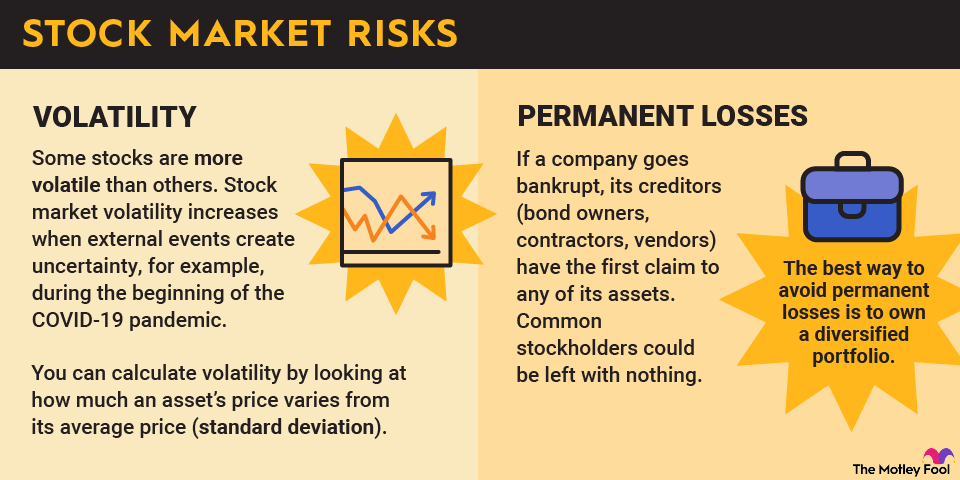
All investments have risks. Stock prices can go up or down. Sometimes, markets crash because of bad news, global events, or company problems. But, over the long term, the market tends to rise. In fact, the S&P 500 has returned an average of about 10% per year over the last 50 years (though some years are much higher or lower).
Credit: www.fool.com
What’s New In The Stock Market In 2026?
The market in 2026 is not the same as it was five or ten years ago. Here are important trends and changes:
1. Artificial Intelligence And Automation
AI is everywhere. Robo-advisors can help you build a portfolio in minutes. AI tools scan news, social media, and earnings reports to predict stock trends. This means you have more data, but you also need to double-check information—sometimes even AI can be wrong.
2. Fractional Shares
You don’t need hundreds or thousands of dollars to invest. Now, you can buy a piece of a share—even $5 or $10 worth. This helps you diversify, even with a small amount.
3. Zero-commission Trading
Most online brokers have removed trading fees, so you can buy and sell without worrying about extra costs.
4. Green And Esg Investing
Many investors want to support companies that are good for the planet and society. ESG stands for Environmental, Social, and Governance—these stocks focus on sustainability and ethical practices. In 2026, ESG funds control over $50 trillion worldwide, according to Bloomberg.
5. Decentralized Finance (defi) And Tokenized Assets
Some stocks are now available as digital tokens, and you can trade them 24/7, not just during market hours. This is still new, so be careful—regulations can change.
Non-obvious insight: In 2026, many companies report their ESG scores alongside earnings. This can affect stock prices as much as profits do.
Setting Your Investment Goals
Before investing, ask yourself: Why am I investing? Your goals will guide your strategy.
-
- Short-term goals (1-3 years): Saving for a vacation, car, or emergency fund.
-
- Medium-term goals (3-7 years): Buying a home, starting a business.
-
- Long-term goals (7+ years): Retirement, college fund, building wealth.
If you need the money soon, you should invest more carefully, because markets can be volatile in the short term.
How Much Should You Invest?
There’s no magic number. Many experts suggest starting with 10-15% of your income if you can. Even small amounts add up over time, thanks to compounding (earning returns on your returns).
Tip: Never invest money you can’t afford to lose. Always keep an emergency fund in cash or a safe account.

Credit: jarvisinvest.com
Choosing A Stock Broker In 2026
Your broker is the company or app you use to buy and sell stocks. Picking the right one is important.
Here’s a comparison of three popular types of brokers in 2026:
| Broker Type | Best For | Fees | Special Features |
|---|---|---|---|
| Robo-Advisor | Beginners, hands-off investors | 0.1%-0.4% per year | Automatic portfolio, AI advice |
| Online Broker | DIY investors, active traders | Usually free | Full market access, research tools |
| Traditional Bank | Conservative investors | Higher fees (up to 1%+) | Personal advice, full service |
Non-obvious insight: Many top brokers now let you open accounts with just a selfie and ID—no paperwork or waiting days for approval.
What To Look For
-
- Low fees: High fees eat your returns.
-
- Easy-to-use app: You want to check your portfolio anytime.
-
- Strong security: Two-factor authentication, insurance.
-
- Good customer support: Fast help if you have problems.
-
- Education: Some brokers offer free courses and tutorials.
How To Start Investing: Step-by-step
Let’s break it down into simple steps you can follow, even if you’re a complete beginner.
1. Decide How You Want To Invest
You can choose to:
-
- Pick your own stocks: Research and buy companies you believe in.
-
- Buy index funds or ETFs: These are baskets of stocks. You buy one fund and own a piece of hundreds of companies.
-
- Let a robo-advisor manage it: Set your goals and risk level; the AI does the rest.
2. Open An Account
Go to your chosen broker’s website or app. You’ll need:
-
- Name, address, and birthdate
-
- Social Security Number (for US) or local ID
-
- Bank account details
Most accounts are approved in minutes.
3. Fund Your Account
Transfer money from your bank. Some brokers offer instant deposits, others take 1-2 days.
4. Research Stocks Or Funds
Don’t buy just any stock. Look for:
-
- Strong earnings: Is the company making money?
-
- Good leadership: Are the CEO and team trusted?
-
- Growth potential: Is the company’s business growing?
-
- Reasonable price: Compare price-to-earnings (P/E) ratios with similar companies.
Example: In 2026, Nvidia’s stock rose over 200% because of strong AI chip sales and high demand. But not every popular stock is a good buy—always check the basics.
5. Place Your First Trade
Decide how many shares (or dollars) you want to invest. Review your order, check the price, and click “Buy. ” You’ll see the shares in your account, often within seconds.
6. Review And Adjust
Check your investments every few months, not every day. Make changes if your goals or the market change, but avoid panic moves.
Popular Stock Market Strategies In 2026
Everyone invests differently, but here are some proven approaches that work in today’s market.
1. Buy And Hold
You buy stocks or funds and keep them for years. This avoids emotional mistakes and benefits from long-term growth.
2. Dollar-cost Averaging
Invest the same amount of money every month, no matter what the market is doing. This smooths out the ups and downs.
Example: If you invest $200 each month, sometimes you’ll buy when prices are low, sometimes when high—but over time, you get a good average price.
3. Dividend Investing
Buy stocks that pay regular dividends. Reinvest those payments to buy more shares and grow faster.
4. Thematic Investing
Focus on trends you believe in—like AI, green energy, or healthcare innovation. Many brokers offer themed ETFs for easy access.
5. Global Diversification
Don’t put all your money in your home country. In 2026, some of the best growth is in Asia, Africa, and Latin America.
Non-obvious insight: In 2026, some brokers let you invest in foreign stocks without extra paperwork or currency fees.
Types Of Stocks And Funds You Can Buy
Understanding your options helps you build a strong portfolio. Here’s a quick guide:
| Type | What It Is | Risk Level | Example |
|---|---|---|---|
| Blue-Chip Stocks | Large, well-known companies | Lower | Apple, Microsoft |
| Growth Stocks | Companies expected to grow fast | Higher | Nvidia, Tesla |
| Dividend Stocks | Companies paying regular income | Medium | Coca-Cola, Johnson & Johnson |
| ETFs/Index Funds | Baskets of stocks tracking an index | Low to medium | Vanguard S&P 500 ETF |
| International Stocks | Companies outside your country | Varies | Tencent, Samsung |
| ESG Funds | Focus on responsible companies | Low to medium | iShares ESG Aware ETF |

Credit: www.youtube.com
Managing Risk: How To Protect Your Money
Every investor faces risks, but you can reduce them with smart habits.
1. Diversify
Don’t put all your money in one stock or sector. Spread your money across:
-
- Different industries (tech, health, finance, etc.)
-
- Different countries or regions
-
- Different asset types (stocks, bonds, cash)
Example: If tech stocks fall, energy or healthcare might rise, balancing your losses.
2. Know Your Risk Tolerance
Some people can handle big swings in value, others can’t sleep if their account drops. Know yourself and invest accordingly.
-
- Conservative: More bonds and stable stocks.
-
- Aggressive: More growth and international stocks.
3. Use Stop-loss Orders
Tell your broker to sell a stock if it falls below a set price. This limits your losses.
4. Keep A Long-term View
Markets go up and down, but over time, they tend to rise. Don’t panic during short-term drops.
5. Avoid Emotional Decisions
Many beginners sell when prices fall and buy when prices rise—the opposite of smart investing. Stick to your plan.
Non-obvious insight: In 2026, some apps can lock your account during market crashes to stop panic selling.
Taxes And Fees: What You Need To Know
Investing isn’t free—taxes and fees can affect your returns.
1. Capital Gains Tax
You pay this tax when you sell a stock for a profit. In the US, short-term gains (held less than a year) are taxed higher than long-term gains.
2. Dividend Tax
If you receive dividends, you may pay tax on them. Rates depend on your country and income.
3. Account Fees
Most brokers are free to use, but some charge for special services or foreign stocks. Always check before you invest.
4. Currency Exchange Fees
If you buy international stocks, you may pay a small fee to convert your money.
Tip: Many countries offer tax-advantaged accounts (like IRAs or ISAs) to help you save more. Use them if you can.
Common Mistakes Beginners Make
Learning from others can save you time and money. Here are key mistakes to watch out for:
-
- Investing without a plan: Know your goals and how much risk you can take.
-
- Chasing hot stocks: Just because a stock is rising fast doesn’t mean it’s a good buy.
-
- Ignoring fees: Even small fees add up over years.
-
- Not diversifying: One company’s problems can wipe out your savings.
-
- Overreacting to news: Markets move every day—don’t let headlines scare you.
-
- Waiting for the perfect time: It’s better to start with what you have than wait for the “perfect” moment.
-
- Using borrowed money: Leverage increases both gains and losses—be careful.
-
- Neglecting to review investments: Check your portfolio at least once a year.
-
- Not learning the basics: Knowledge is your best defense.
-
- Falling for scams: If something sounds too good to be true, it probably is.
Non-obvious insight: In 2026, social media “influencers” can move prices, but following their advice blindly is risky. Always do your own research.
How To Stay Informed And Keep Learning
The market changes fast. Staying informed helps you make better decisions.
Top Ways To Learn In 2026
-
- Follow financial news: Use trusted sites like CNBC, Reuters, or your broker’s news feed.
-
- Take free courses: Many brokers offer online classes.
-
- Join investment communities: Forums like Reddit’s r/investing can be helpful, but watch out for hype.
-
- Read annual reports: Company reports show real data, not just opinions.
-
- Subscribe to newsletters: Many experts share market updates and tips.
Tip: Set aside 30 minutes a week to review your investments and read market news.
Advanced Investing: For When You’re Ready
Once you understand the basics, you might want to explore advanced options.
1. Options And Futures
These are contracts to buy or sell stocks at a certain price in the future. They can offer big rewards but are risky—learn fully before using them.
2. Margin Trading
Borrow money from your broker to buy more stocks. Gains can be bigger, but losses can be too.
3. Short Selling
Betting that a stock will fall. This is complex and risky—best for experienced investors.
4. Direct Indexing
Build your own index fund, choosing the stocks and weights yourself. Some brokers offer this with AI help.
5. Crypto And Blockchain Stocks
Some investors add digital assets or blockchain companies to diversify.
Important: Advanced investing can be rewarding but also dangerous. Never risk more than you can afford to lose.
The Role Of Ai And Technology In 2026 Investing
Technology is changing how we invest. In 2026, you can use:
-
- AI-powered research tools: Get fast insights from millions of data points.
-
- Social investing apps: See what top investors are buying (but always think for yourself).
-
- Automated tax tools: Track your gains and file tax forms automatically.
-
- Voice commands: Buy or sell stocks with your smart speaker.
But remember, technology is just a tool. It helps, but it doesn’t replace careful thinking.
Non-obvious insight: Some new AI tools can predict market moves with surprising accuracy, but they can still make mistakes. Don’t trust any one tool fully—always double-check.
Case Study: A Simple Portfolio For 2026
Let’s see how a beginner might invest $1,000 in 2026. Here’s a sample portfolio:
| Investment | Amount | Why Choose It? |
|---|---|---|
| S&P 500 ETF | $500 | Diversified, tracks US market |
| International ETF | $200 | Exposure to global growth |
| ESG Fund | $200 | Responsible investing trend |
| Individual Stock (e.g., Apple) | $100 | Potential for higher growth |
This approach is balanced, diversified, and focused on long-term growth.
Tip: Rebalance your portfolio once a year—if one part grows too big, move some money to other parts.
Getting Started: Your Action Plan
Ready to invest? Here’s a quick checklist:
-
- Define your goals and time frame.
-
- Choose a reputable, low-fee broker.
-
- Decide how involved you want to be (DIY, robo-advisor, or both).
-
- Start with index funds or ETFs for easy diversification.
-
- Add individual stocks as you learn more.
-
- Invest regularly, even small amounts.
-
- Review your plan every few months.
-
- Keep learning and stay patient.
Remember: Starting is the most important step. Don’t let fear or confusion hold you back.
Frequently Asked Questions
How Much Money Do I Need To Start Investing In Stocks In 2026?
You can start with as little as $1 thanks to fractional shares. Many brokers have removed minimums, so small regular investments are possible and effective.
Are Stocks Safe For Beginners In 2026?
Stocks always have some risk, but with diversification and a long-term view, they can be safe for most people. Avoid putting all your money in one stock, and don’t invest money you need soon.
What’s The Difference Between A Stock And An Etf?
A stock is one company, while an ETF (exchange-traded fund) is a basket of stocks. ETFs offer instant diversification and lower risk, making them great for beginners.
How Do I Pick Good Stocks?
Look for strong earnings, trustworthy leadership, and companies with real growth. Don’t chase hype—do your own research, and consider starting with index funds before picking individual stocks.
Where Can I Learn More About Investing?
You can find reliable, up-to-date information on sites like Investopedia, which explains both basics and advanced topics in clear language.
Investing in the stock market in 2026 is more accessible and exciting than ever. With the right tools, patience, and a learning mindset, you can build your financial future—one step at a time. Start today, stay curious, and let your money work for you.