Time 1:14 pm, Tuesday, 14 July 2026

The Digital Diet: Are Food Tracking Apps Truly Improving Public Health?

Zahidul islam
  • Update Time : 05:39:06 am, Tuesday, 14 July 2026
  • / 1 Times Read

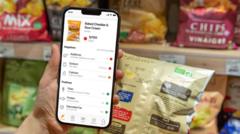
In an era defined by hyper-connectivity and the quantification of everyday life, food tracking applications have emerged as a ubiquitous tool for health-conscious consumers. These digital platforms promise to demystify nutrition by allowing users to log every calorie, macronutrient, and micronutrient consumed throughout the day. While the convenience of portable calorie counting has undoubtedly empowered many individuals to take control of their dietary habits, experts are increasingly debating whether this obsession with data is a holistic path to wellness or a potential gateway to disordered eating behaviors.

The appeal of these applications lies in their ability to provide immediate feedback. By visualizing the caloric density of a meal or highlighting the sugar content in a snack, users are often nudged toward more nutritious choices. For individuals managing chronic conditions like diabetes or those aiming for specific fitness milestones, the granular data provided by these apps can be a vital component of clinical management. The gamification of nutrition—awarding streaks for consistent logging or badges for healthy choices—further incentivizes user engagement, turning the mundane task of recording meals into a measurable objective.

However, health professionals caution that the relentless pursuit of data accuracy can have unintended psychological consequences. The pressure to maintain a ‘perfect’ streak or to stay within rigid caloric limits can foster an unhealthy preoccupation with food. Critics argue that these apps often fail to account for the emotional and social dimensions of eating, reducing complex human nourishment to mere fuel efficiency. When the focus shifts from intuitive hunger cues to numerical limitations, some users may find themselves experiencing increased anxiety, social isolation during meals, or even the development of orthorexia nervosa, an unhealthy fixation on ‘clean’ eating.

Furthermore, the long-term efficacy of these tools remains a subject of ongoing research. While many users report initial success in weight management, the sustainability of manual food logging is often low, with many individuals abandoning the practice after a few months. The reliance on user-reported data also introduces significant margins for error, as portion estimation is notoriously inaccurate. For the average person, the challenge is not necessarily a lack of information, but rather the translation of that data into sustainable lifestyle habits. Experts suggest that rather than focusing on exhaustive logging, individuals might benefit more from mindful eating practices that emphasize food quality, satiety, and the enjoyment of meals without the constant interference of a screen. Ultimately, while food tracking apps serve as a powerful educational instrument, their role in public health should be balanced with a focus on psychological well-being and a nuanced understanding of human nutrition.

Share The News

Your comment

Your email address will not be published. Required fields are marked *

Save your email and other information.

Uploader's Information

Zahidul islam

**Zahidul Islam** is the Founder and Editor of **NewsHot24**, a digital news platform dedicated to delivering accurate, timely, and trustworthy news. He specializes in covering technology, artificial intelligence, business, world news, entertainment, sports, and trending topics. With a strong focus on fact-checking, editorial quality, and reader-first journalism, Zahidul creates well-researched, original content that keeps audiences informed. He is passionate about digital publishing, SEO, and building a reliable online news source that meets modern journalism standards. His mission is to provide credible, easy-to-understand reporting while maintaining transparency, accuracy, and editorial integrity for readers around the world.

The Digital Diet: Are Food Tracking Apps Truly Improving Public Health?

Update Time : 05:39:06 am, Tuesday, 14 July 2026

In an era defined by hyper-connectivity and the quantification of everyday life, food tracking applications have emerged as a ubiquitous tool for health-conscious consumers. These digital platforms promise to demystify nutrition by allowing users to log every calorie, macronutrient, and micronutrient consumed throughout the day. While the convenience of portable calorie counting has undoubtedly empowered many individuals to take control of their dietary habits, experts are increasingly debating whether this obsession with data is a holistic path to wellness or a potential gateway to disordered eating behaviors.

The appeal of these applications lies in their ability to provide immediate feedback. By visualizing the caloric density of a meal or highlighting the sugar content in a snack, users are often nudged toward more nutritious choices. For individuals managing chronic conditions like diabetes or those aiming for specific fitness milestones, the granular data provided by these apps can be a vital component of clinical management. The gamification of nutrition—awarding streaks for consistent logging or badges for healthy choices—further incentivizes user engagement, turning the mundane task of recording meals into a measurable objective.

However, health professionals caution that the relentless pursuit of data accuracy can have unintended psychological consequences. The pressure to maintain a ‘perfect’ streak or to stay within rigid caloric limits can foster an unhealthy preoccupation with food. Critics argue that these apps often fail to account for the emotional and social dimensions of eating, reducing complex human nourishment to mere fuel efficiency. When the focus shifts from intuitive hunger cues to numerical limitations, some users may find themselves experiencing increased anxiety, social isolation during meals, or even the development of orthorexia nervosa, an unhealthy fixation on ‘clean’ eating.

Furthermore, the long-term efficacy of these tools remains a subject of ongoing research. While many users report initial success in weight management, the sustainability of manual food logging is often low, with many individuals abandoning the practice after a few months. The reliance on user-reported data also introduces significant margins for error, as portion estimation is notoriously inaccurate. For the average person, the challenge is not necessarily a lack of information, but rather the translation of that data into sustainable lifestyle habits. Experts suggest that rather than focusing on exhaustive logging, individuals might benefit more from mindful eating practices that emphasize food quality, satiety, and the enjoyment of meals without the constant interference of a screen. Ultimately, while food tracking apps serve as a powerful educational instrument, their role in public health should be balanced with a focus on psychological well-being and a nuanced understanding of human nutrition.